
 iscover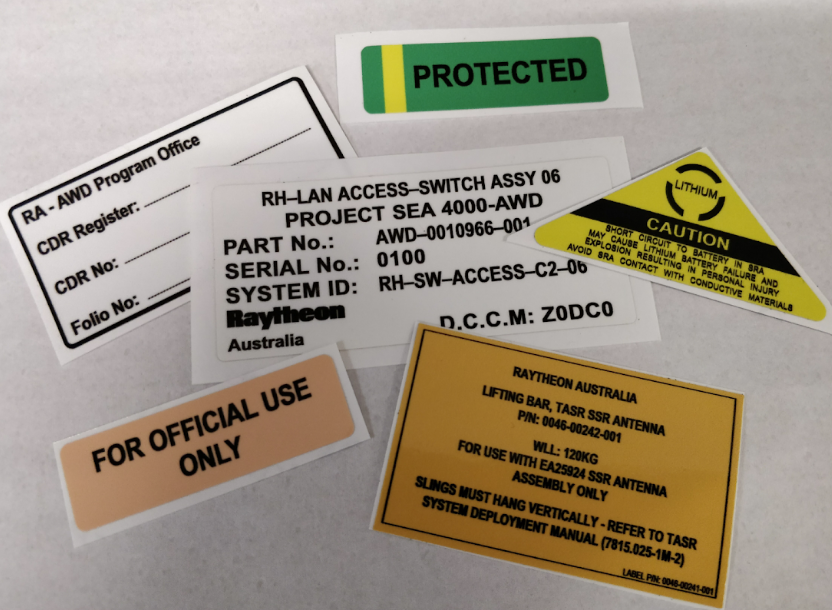
When a component is pulled from an RAAF aircraft for inspection, overhaul or replacement, the paperwork trail matters just as much as the part itself. Airworthiness certification depends on being able to prove, at any point in an aircraft’s service life, exactly what a component is, where it came from, what standard it was built to, and what maintenance it has undergone. That entire chain of proof starts with something surprisingly small: the physical identification tag or plate fixed to the part itself.
This content is available exclusively to Australian Aviation members.
A monthly membership is only $5.99 or save with our annual plans.
- Australian Aviation quarterly print & digital magazines
- Access to In Focus reports every month on our website
- Unlimited access to all Australian Aviation digital content
- Access to the Australian Aviation app
- Australian Aviation quarterly print & digital magazines
- Access to In Focus reports every month on our website
- Access to our Behind the Lens photo galleries and other exclusive content
- Daily news updates via our email bulletin
- Unlimited access to all Australian Aviation digital content
- Access to the Australian Aviation app
- Australian Aviation quarterly print & digital magazines
- Access to In Focus reports every month on our website
- Access to our Behind the Lens photo galleries and other exclusive content
- Daily news updates via our email bulletin
Keeping Australia’s military aircraft airworthy: The overlooked role of asset identification
For an aircraft that may remain in service for three or four decades, components move between airframes, workshops, depots and contractors many times over. Each time, the physical identifier is what allows a technician to confirm a part matches its maintenance record, rather than relying on a description or a serial number written on a work order that has long since been filed away. If that tag fades, corrodes, or falls off, the link between the physical part and its documented history is broken, and with it, a piece of the evidence airworthiness authorities rely on.
This is where the manufacturing standard behind an asset tag becomes a genuine safety consideration, not just an administrative one. Military aviation components are subjected to extreme temperature cycling, vibration, fuel and hydraulic fluid exposure, and repeated handling across their service life. A label that cannot survive those conditions for as long as the part itself is in service creates a traceability gap that no amount of digital record-keeping can fully close on its own.
Brisbane-based manufacturer Metal Sign & Label has spent more than three decades supplying asset identification products into exactly these conditions, working across the defence supply chain with primes, tier suppliers and the Department of Defence’s Capability Acquisition and Sustainment Group. The company’s asset tags, compliance plates and Unique Identification (UID) labels are manufactured to meet DEF(AUST) and MIL-STD standards, using anodised aluminium and stainless steel substrates chosen specifically for their resistance to the conditions aviation components face.
A key part of that durability comes down to how information is applied to the label itself. Metal Sign & Label’s patented MetalPRINT process embeds text, barcodes and part information directly into the anodic layer of the metal, rather than printing on top of the surface, meaning the identification cannot peel, flake or fade over decades of handling. For components where the physical size or curvature makes an embedded print impractical, high-resolution fibre laser marking offers a permanent, high-contrast alternative that holds up to the same operating environment.
As a DISP-accredited, ISO 9001-certified and GS1 Alliance Partner business, Metal Sign & Label also builds identification systems that integrate with the digital asset management platforms Defence and its primes already use, so a barcode or QR-coded tag on a physical component connects directly back to the electronic maintenance record it needs to support. That combination of physical durability and system integration is what closes the loop between a component sitting on a shelf or bolted to an airframe, and the documentation that proves it is airworthy.
As Australia continues to grow its sovereign defence industrial base, the manufacturers behind less visible components – including the identification systems that keep aircraft maintenance records reliable – are playing a genuine role in sustaining the fleet’s operational availability. Metal Sign & Label, 100 per cent Australian owned and manufactured from its Brisbane facility, is one of the local businesses building that capability from the ground up, one durable label at a time.

Want to see more stories from trusted news sources?
Make Australian Aviation a preferred news source on Google.
Click here to add Australian Aviation as a preferred news source.





