
 iscover
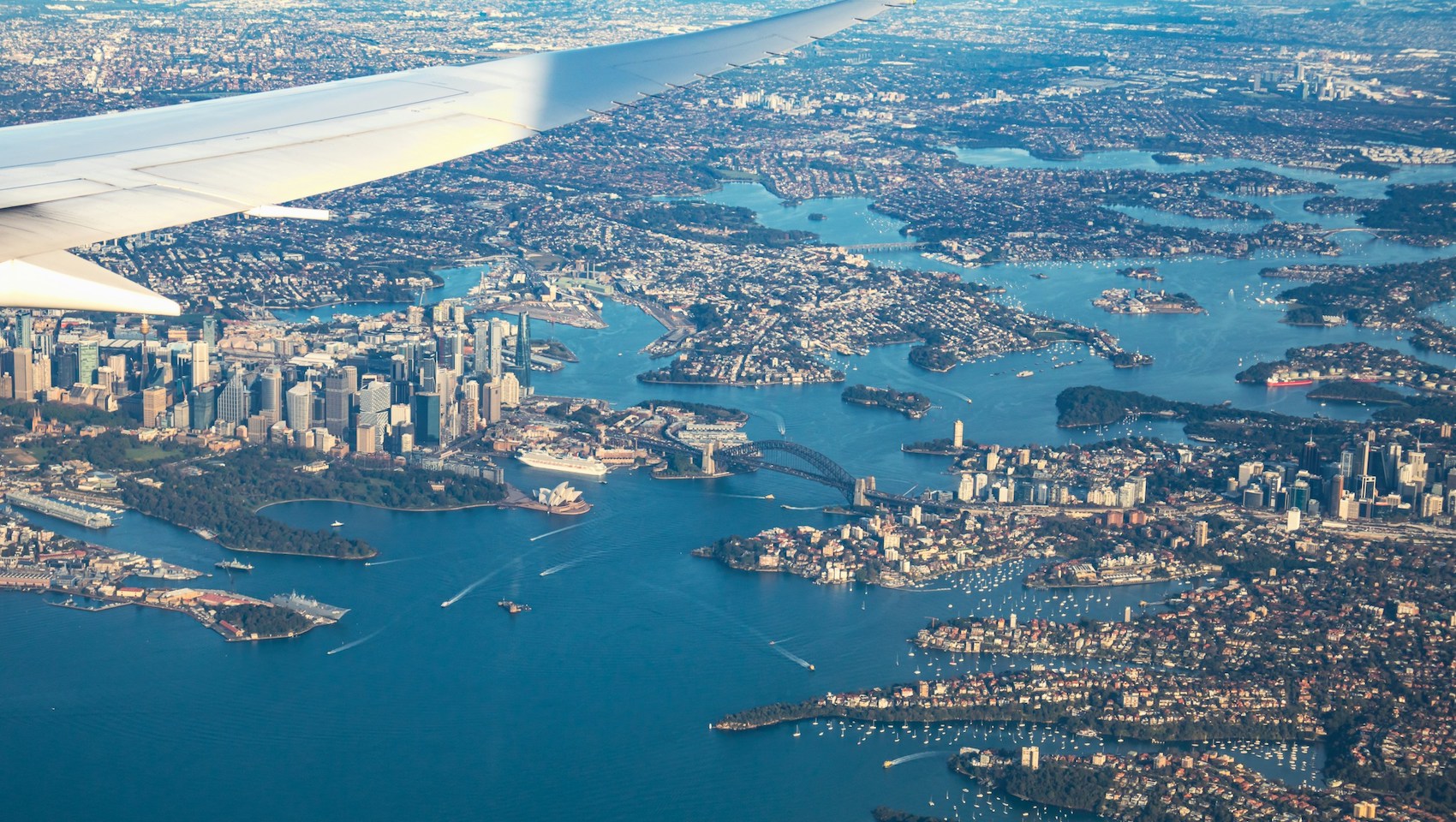 As the NSW Government pushes its “Transport Oriented Development” (TOD) program to address a generational housing shortage, a secondary, invisible regulatory layer is quietly capping the state’s ambitions. Across Sydney’s inner-ring, the city’s skyline isn’t being determined by architects or urban planners, but by 70-year-old aviation safety frameworks that many in the property sector argue are failing to reflect the precision of 21st-century flight.
At the centre of this friction are PANS-OPS (Procedures for Air Navigation Services – Aircraft Operations) surfaces. These are the federally mandated “imaginary planes” in the sky that dictate the maximum height of any structure to ensure safe instrument-led approaches and departures.
Unlike “soft” aviation limits like the Obstacle Limitation Surfaces (OLS), which can occasionally be negotiated with safety mitigations, PANS-OPS is a hard ceiling. If a building pokes through it, it simply doesn’t get built.
The physical manifestation of these rules is visible in the skylines of Mascot, Wolli Creek, and Alexandria. The buildings do not taper or vary; they terminate abruptly at a uniform height, creating a “flat-top” urban profile.
For developers like Meriton, Hans Group, Star Entertainment Group, Conquest, and Sydney Metro, and many more these invisible lines represent a massive loss in density. In one Bayside development, Meriton saw a 65-metre tower slashed to 37 metres a nearly 50% loss in yield simply to remain below a PANS-OPS transition zone. With construction costs up 40%, losing the top three floors often moves a project from “essential housing” to “financially unviable.” The land simply sits idle.
The current PANS-OPS settings are largely legacy-driven. Historically, flight path heights were dictated by the conservative climb gradients of heavily laden, long-haul “heavies.” Because older aircraft gained altitude slowly and relied on less precise ground-based beacons, the safety buffers below them had to remain deep and wide.
While GNSS (Global Navigation Satellite System) and ground-based GPS augmentation (GRAS/GBAS) have been part of the Australian landscape for over a decade, the industry argues that the utilisation of this precision has not yet translated into reclaimed airspace for urban development. Modern aircraft like the A321neo climb faster and navigate with pinpoint accuracy.
Critics of the current settings suggest that raising the PANS-OPS ceiling by just 15 metres the height of roughly five storeys could unlock tens of thousands of homes in TOD zones with zero additional land acquisition.
However, any call for change must survive the gravity of aviation reality. Australia is a signatory to the Convention on International Civil Aviation, meaning we are bound by ICAO standards. These PANS-OPS surfaces are not arbitrary; they are under constant review by international panels to ensure safety for all operations, including emergency and ambulance flights which utilise these instrument procedures even during the Sydney Airport curfew (11 pm to 6 am).
Furthermore, the opening of Western Sydney International (WSI) Airport in 2026 while a strategic “opening” is not a magic wand. While WSI will operate 24/7 and handle significant freight, global trends suggest that “heavy” long-haul carriers will likely remain at Sydney Kingsford Smith (KSA). Moreover, WSI is subject to the same ICAO height restrictions as any other airport; the “invisible ceiling” simply moves to a new post-code.
The contradiction in Sydney’s planning debate is becoming impossible to ignore. One arm of government (State) calls for radical housing density, while another (Federal) preserves legacy constraints that suppress it.
As the 2026 opening of WSI approaches and the Commonwealth reviews the legislation protecting Sydney’s airspace, the pressure is mounting on Airservices Australia and CASA to distinguish between genuine safety necessity and regulatory inertia.
Sydney needs more homes for now and future generations. The question is whether our policymakers are prepared to modernise the invisible rules that stop those homes from being built in the very places they make the most sense. If we can fly more precisely and climb more steeply, why is the inner city still living under a 1950s ceiling?
Safety must remain non-negotiable, but in a city under an acute housing epidemic, the settings that ensure that safety must be reviewable.