
 iscover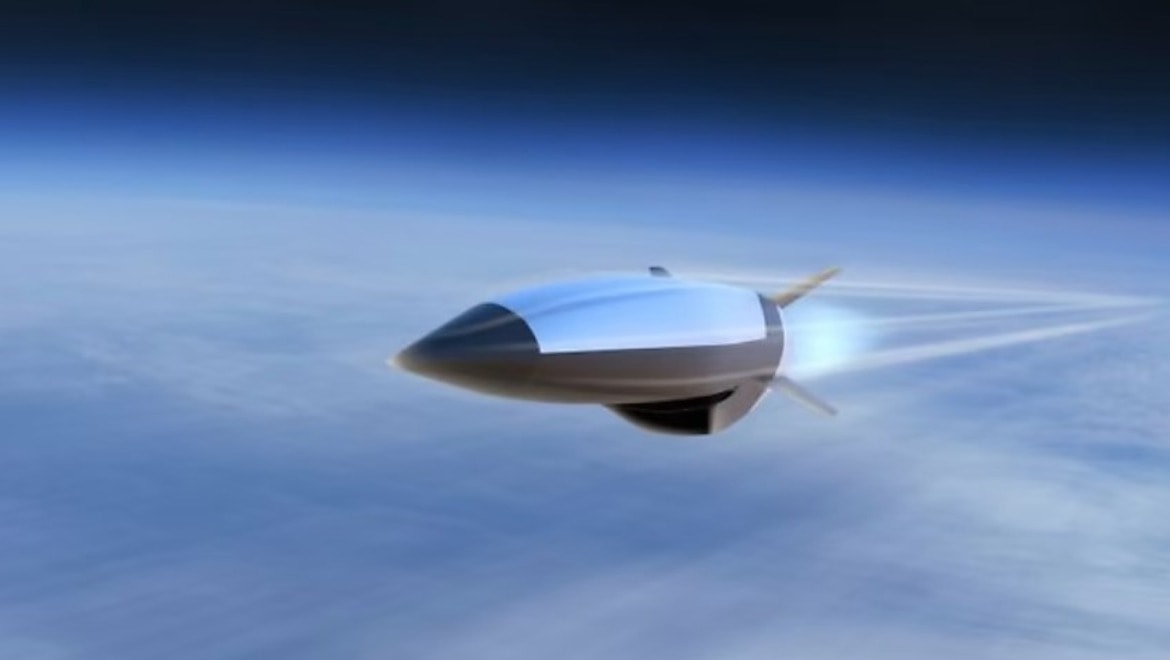
Northrop Grumman and Raytheon have been selected to develop a hypersonic attack cruise missile (HACM) for the US Air Force.
This content is available exclusively to Australian Aviation members.
A monthly membership is only $5.99 or save with our annual plans.
- Australian Aviation quarterly print & digital magazines
- Access to In Focus reports every month on our website
- Unlimited access to all Australian Aviation digital content
- Access to the Australian Aviation app
- Australian Aviation quarterly print & digital magazines
- Access to In Focus reports every month on our website
- Access to our Behind the Lens photo galleries and other exclusive content
- Daily news updates via our email bulletin
- Unlimited access to all Australian Aviation digital content
- Access to the Australian Aviation app
- Australian Aviation quarterly print & digital magazines
- Access to In Focus reports every month on our website
- Access to our Behind the Lens photo galleries and other exclusive content
- Daily news updates via our email bulletin
The project forms part of a collaboration with the Southern Cross Integrated Flight Research Experiment (SCIFiRE) — a joint initiative between the United States and Australia.
As part of the project, the primes have been tasked with delivering “operationally ready” HACM missiles, billed as an air-breathing, scramjet-powered munition.
While hypersonic tech — defined as flying at least five times the speed of sound — is nothing new, countries are currently in an arms race to develop the next generation of missiles that are so manoeuvrable in mid-air that they can’t be intercepted or detected.
There are currently two major ways it’s thought manoeuvrable hypersonic vehicles and missiles could work.
The first, known as a hypersonic cruise missile, would see a rocket blast to Mach 5 before using an air-breathing engine, or scramjet, to maintain its momentum.
The second, known as a glide vehicle, sees a rocket blast into the sky before releasing a separate hypersonic missile that has built up enough velocity to travel under its own speed. The two-step system means it can cruise along in the upper atmosphere with enough atmosphere to maintain lift but without too much to create drag.

“Raytheon Missiles & Defense continues to be at the forefront of hypersonic weapon and air-breathing technology development,” Wes Kremer, president of Raytheon Missiles & Defense, said.
“With advanced threats emerging around the globe, the Hypersonic Attack Cruise Missile will provide our warfighters a much-needed capability.”
Mary Petryszyn, corporate vice president and president, Northrop Grumman Defense Systems, said HACM would create a new class of strategically important weapons.
“Our scramjet propulsion technology is ushering in a new era for faster, more survivable and highly capable weapons,” she said.
This latest initiative builds on three years of collaboration between Northrop Grumman and Raytheon Technologies on the development, production and integration of Northrop Grumman’s scramjet engines onto Raytheon’s air-breathing hypersonic weapons.
In July, the primes completed the second flight test of the scramjet-powered Hypersonic Air-breathing Weapon Concept (HAWC) in cooperation with the Defense Advanced Research Projects Agency (DARPA) and the US Air Force.
Drawing from the results of the first flight test, the exercise aimed to mature the operationally relevant weapon concept design.
HAWC was released from an aircraft and accelerated to hypersonic speeds leveraging the scramjet engine, with the vehicle flying a trajectory that engineers designed to intentionally stress the weapon concept and explore its limits.
The test reportedly achieved all primary and secondary objectives, which included demonstrating tactical range capabilities.
Want to see more stories from trusted news sources?
Make Australian Aviation a preferred news source on Google.
Click here to add Australian Aviation as a preferred news source.







Geoffrey McKell
says:“The project forms part of a collaboration with the Southern Cross Integrated Flight Research Experiment (SCIFiRE) — a joint initiative between the United States and Australia. ”
Yet your article is completely devoid of the Australian component of the technology merge. Hullow!
I do recall this magazine had an article some time ago (maybe 9 months ago??) about and Australian company who had the eyes of the US Govt right up there when the Aussie company had successfully launched a (mostly) 3D printed hypersonic vehicle at a time when things for some years had gone south in hypersonic tests in the US…..is this company in the mix?
As mentioned above, no reference at all about the Aussie company.
Why has this magazine not made mention of the Australian component?