
 iscover
In Focus
The battle for Tumut
 0 comment


Tumut Airport’s unique location resulted in it becoming a key base for aerial firefighters during Australia’s recent bushfire crisis, saving properties and lives. But it’s weak and weary runway sees aircraft unable to fill their water tanks to capacity and take off, while water has to be carted in from the main street, with no water line to the aerodrome. Yet, with an upcoming byelection, Tumut’s needs are finally being heard. Hannah Dowling investigates.
Tumut Airport sits at the north-western foothills of the Snowy Mountains in regional NSW, around 300 kilometres south-west of Sydney and just 80 kilometres west of Canberra. Once used as a link in RPT routes, the airport is now home to a local aeroclub, and otherwise serves mostly recreational pilots. The sleepy airport recently made headlines, in light of its critical role played in the recent devastating bushfire season that ravaged through the nation, and an unfortunate flaw in the airport’s capacity.
To learn more, Australian Aviation spoke with Snowy Valleys Council deputy mayor John Larter. Cr Larter has been passionately outspoken about the state of Tumut Airport, and what needs to be done to ensure the airport can continue to serve its local communities in the combat of catastrophic bushfires well into the future. In addition to being the deputy mayor of the Snowy Valleys Council, Cr Larter also serves as the president of the Aerodrome Committee. Further, he has also spent time working as a paramedic in the area with Air Ambulance and holds both a private pilot licence and a commercial helicopter licence. As such, he is very acquainted with the Tumut Aerodrome, and more qualified than most to discuss its past, present and future.
This content is available exclusively to Australian Aviation members.
A monthly membership is only $5.99 or save with our annual plans.
- Australian Aviation quarterly print & digital magazines
- Access to In Focus reports every month on our website
- Unlimited access to all Australian Aviation digital content
- Access to the Australian Aviation app
- Australian Aviation quarterly print & digital magazines
- Access to In Focus reports every month on our website
- Access to our Behind the Lens photo galleries and other exclusive content
- Daily news updates via our email bulletin
The airport was built in the 1960s, and is today what the deputy mayor calls your “typical country airport”, however, some would argue that it is so much more than that. Cr Larter has spent months advocating for a $12.5 million investment in upgrades for the Tumut Aerodrome; in recognition of the vital, not-so-typical role it currently plays and will continue to play, in saving lives and livelihoods across regional NSW, Victoria and Canberra.
From September 2019 through to February 2020, raging bushfires blazed throughout the nation, hitting regional areas the hardest. The ongoing catastrophic fires earned their name, the ‘Black Summer’ fire season. Over the course of Australia’s recent ‘Black Summer’, Tumut played an essential role in the aerial combat of bushfires, both around the Snowy Mountains and further east, in Australia’s capital.
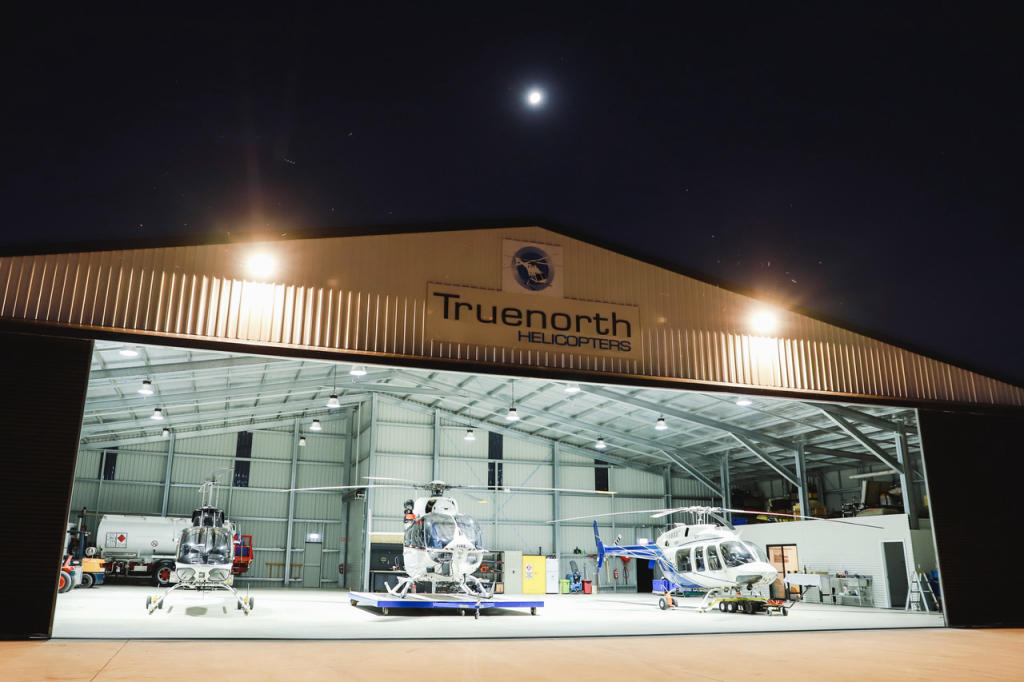
“Strategically, Tumut is in a very good spot for fighting fires,” Cr Larter says, and is a vital resource for the Rural Fire Service, which has based itself at Tumut, and invested heavily in the aerodrome. TrueNorth helicopters, which specialises in aerial firefighting, has also set up shop at the Tumut Aerodrome. Further, with a flight time of just 30 minutes to Canberra, the deputy mayor stated that Tumut Airport played a critical role in the combat of raging fires in the Canberra region when access to the international airport in Canberra was unavailable.

As a regional centre, Cr Larter also pushed the importance of access to aeromedicine in the township.
“When you don’t have the range of medical services available in regional areas and towns, if you don’t have neurosurgeons and you don’t have cardiothoracic surgeons and we can’t do heart transplants or certain drug therapies, people need to get to tertiary hospitals and major centres,” he says.
“And if that means an air ambulance flying to places like Tumut to pick them up to take them back to Sydney in under an hour, well then that’s how it should be done.”
He noted that Tumut is in a prime position for the provision of fixed-wing aeromedical aircraft, which can outperform medical helicopters in the extreme weather conditions of the Snowy Mountains, and better serve the communities of southern NSW.
“We’re on the opposite side of the mountain to all of the helicopters, and when you get to freezing temperatures, it’s not always an option to launch a helicopter for somebody who’s medically sick,” Cr Larter says.
“Given the fact that those freezing levels can often preclude them from taking off. That’s why it’s really important for Tumut to have the capability of supporting fixed-wing medical aircraft.”
Yes, due to its unique location, Tumut Airport has recently found itself to be an unassuming hero in both the aerial combat of bushfires, as well as the provision of aeromedicine to much of central and southern NSW. However, the airport is in desperate need of vital infrastructure updates and repairs, with the local council pushing for government assistance. According to the Snowy Valleys Council deputy mayor, the setup at Tumut Airport was “good for its day”, but is far from reaching its full potential. If the airport is to continue to play its essential role in the combat of bushfires and the provision of aeromedicine, as the bushfire seasons grow longer and stronger, then the airport will require ‘at least’ $12.5 million worth of infrastructure upgrades.
Firstly, the runway sits at just over 1,000 metres, and is approved to carry a maximum take-off load of 5,700 kilograms, two characteristics of the Tumut Aerodrome that the deputy mayor considers “limiting”. According to Cr Larter, the runway needs to be both lengthened and widened, to accommodate for modern, larger, heavier aircraft.
An issue that brought Tumut Airport to the forefront of media attention, and indeed to that of Australian Aviation, was the news that local aerial firefighting aircraft were being sent out to battle blazes across rural NSW and the ACT at two-thirds of their maximum water capacity. According to Cr Larter, the runway is both too short and too weak to handle the water bomber aircraft at their maximum take-off weight.
“The technical issue is that the runway isn’t long enough for the aircraft that they’re using to operate at full water capacity and take-off,” he says. “And so, for instance, if we’re operating 60 bomber flights a day, and they’re only taking off at two-thirds their operational capacity … imagine how many more houses, wildlife and livelihoods we could potentially save if we get that increased capacity at the airport.”
The runway, unfortunately, isn’t the only issue facing aerial firefighters trying to dispatch out of Tumut Airport. The airport currently has no meaningful access to water, so water bombers filling up their tanks to combat the raging bushfires must wait for water to be carted in from the main parts of the small town, creating a “backlog”.
“As it currently stands, we have to tanker the water out to the airport, to be able to load the airplanes up with the water,” Cr Larter explains. “So, it would be vitally important to include as part of that infrastructure upgrade, a water line from town to the aerodrome, to cut down the time it takes to get those water bombers active.”
Another issue is that the aerodrome does not facilitate night landings on visual approach, despite there being means of lighting the airport and the runway, which dampens its effectiveness in terms of aeromedical flight and aerial firefighting. The lighting available at the airport was not commissioned and therefore cannot be utilised, meaning most aircraft are only free to land at Tumut during daylight hours.

According to Cr Larter, the locals installed lighting at Tumut Airport over two decades ago, to ensure the airport could be utilised 24 hours a day. However, the lighting that was installed was a community project, and as a result, wasn’t officially commissioned, and doesn’t meet the appropriate requirements to be utilised today.
“The lighting that they put in, although it is there, it doesn’t meet the statutory requirements for today. And therefore, can’t be grandfathered,” Cr Larter says. “So, we’re in a bit of a predicament, in that, there is lighting there, but it doesn’t meet standards so we can’t use it.”
This particular problem is most noted in relation to the provision of aeromedicine from Tumut Airport. Cr Larter notes that, as aviation and technology has developed, aircraft have become more capable of landing on a shorter strip, however, are also a lot heavier than the fixed-wing aircraft of the time.
“The aeromedical fraternity uses, predominantly, King Airs. They don’t make the 200 King Air anymore so now it’s a case of using the 350, which is considerably heavier,” he says.
The runway’s length and weight limitations, combined with the lighting issue, means that the King Air aircraft most often utilised by aeromedical organisations, including air ambulance, CareFlight and the RFDS, are effectively unable to land at Tumut at night, and otherwise, need special prior permission to utilise the tarmac during the day. The King Air 350 (and 350i) has a maximum take-off weight of 6,800 kilograms, compared with the 200 aircraft, which was about 1,200 kilograms lighter. This means that currently, every time the aeromedical King Air aircraft land at Tumut, they require a dispensation to operate at the Airport by the council, due to its excessive weight, says Cr Larter.
“It’s the same predicament for the helicopters. Most of the helicopters that are operated aeromedically are AW139s, and they’re around about 8,000 kilograms,” he adds, “So, it creates considerable strain on the tarmac and on the taxiways and on all the infrastructure at the airport.”
So, what needs to be done?
As you can see, there’s quite a bit to be done to bring Tumut Airport back up to the standards of a modern aerodrome, and to see it play its part in the saving of lives and livelihoods of regional Australians for decades to come. The runway needs to not only be extended, by “probably 300 metres”, but it needs to be widened, too, so as to accommodate heavier aircraft, and adequately equip water bombers in their fight against Australia’s bushfires. Appropriate lighting needs to be installed so that non-instrument rated aircraft and aircrew can land into Tumut, day or night. A waterline needs to be established that will link Tumut Aerodrome to the main water supply of Tumut. There’s also a variety of other works that need to be conducted to ensure that the Tumut Aerodrome is safe and secure, according to Cr Larter.
In the Snowy Valleys Council meeting minutes on Thursday, 21 November 2019, the council agreed to apply for the federal government’s $100 million Regional Airports Grant Program, to get some federal funding for the necessary upgrades at Tumut Airport. The program was announced by the government in the 2019-20 budget to provide financial assistance to the owner of regional airports, to undertake essential works, and promote aviation safety and access.
According to minutes, the council agreed to apply for $459,000 in federal funding, to improve drainage issues at the airport, seal the taxiways, update the animal-proof fencing around aerodrome, lengthen and widen the sealed runway, and make necessary changes to the lighting systems. In addition to its application to the program, the council pledged $153,000 from its budget to contribute to the upgrades and repairs, while also organising negotiations with the NSW Rural Fire Service to contribute a further $153,000 for upgrades to the runway.
“The infrastructure upgrade that we’ve asked for through the Deputy Prime Minister Michael McCormack is for the lengthening of the runway, the widening of the strip and the strengthening of the strip and the associated pavement areas, and also upgrading of the facility in terms of lighting,” Cr Larter explains.
On Monday, 15 June 2020, Deputy PM McCormack announced that Tumut Airport would be granted $152,984 in federal assistance under the program, to seal the taxiway and apron, address the drainage issues, and upgrade the fencing around the airport.
“Well, it’s a start, but it’s more cosmetic than anything,” Cr Larter says. “It will provide some upgrades to the existing rural fencing, essentially to ensure that we don’t have any stray animals on the tarmac or in the airport, and to provide some level of security … keeping spectators at a safe distance.
“So, there will be some internal improvements to the fencing and also some sealing of the taxiways around the fuel bowser and some drainage work.”
However, you may note that none of the assistance provided through the program is to upgrade the runway, nor the lighting infrastructure at Tumut Aerodrome.
“That money leaves us no better off in regards to our operational capability at Tumut. It’s essentially just a bit of window dressing,” Cr Larter says. Despite the somewhat disappointing funding outcome for the Tumut Aerodrome, Deputy PM McCormack, who is also the member for nearby Riverina, later encouraged the Snowy Valleys Council to apply for further funding in future rounds of the Regional Airport Grant Program.
“The government looks forward to inviting application for funding under the next round of the Regional Airport Program later in 2020,” he says.
Cr Larter and the township of Tumut, as well as the surrounding towns, can easily recognise the vital role that the Tumut Airport offers to the greater good of regional NSW and Canberra, and they’re not alone. The RFS and adjacent services have noted the strategic location of Tumut Airport and set up bases in and around the airport. However, the airport has also grabbed the attention of state and federal politicians.
For Cr Larter, the upgrades played a part in the hotly contested seat of Eden-Monaro, which went to polls on 4 July, with the deputy mayor stating it’s an “opportune time” to pledge support for Tumut and its aviation sector. Further than that, the shadow cabinet of the NSW state government visited the Tumut Aerodrome and agreed that its role is essential, and these upgrades are necessary.
“[The upgrade] has bilateral support. I’ve had the shadow cabinet from the state government out at the site. Mick Veitch and Walt Secord, who is the shadow treasurer, agree that the work just needs to be done. It’s just infrastructure that is critical, and we just need to get on and do it,” Cr Larter says.
After being recognised by a variety of support services, including the RFS, TrueNorth Helicopters, and aeromedicine providers, as well as by local, state and federal governments, Cr Larter hopes that the future of Tumut will be bigger, healthier, and more supported than ever before, with the help of a collective pool of investment. The deputy mayor and the rest of Snowy Valleys Council will continue to spread the word on the importance of Tumut Airport and why it’s worth investing in, but Cr Larter isn’t ready to stop just at Tumut.
“Tumut’s upgrades should be a blueprint. Airports should be safe, and they should be accessible. And that should be the case all over the country,” he says.
Cr Larter argues that in Australia, with its beautiful vastness, “we need connectivity”, and for decades already, a key answer to that problem has been local general aviation and RPT services.
“I would certainly encourage all airport operators to make the standard of aerodromes as high as possible, and as safe as possible. And certainly, apply for any funding, especially federal funding, that you’re eligible for,” Cr Larter says.
“I know Michael McCormack, the Deputy Prime Minister, he’s a very strong supporter and advocate for general aviation. And I think people just need to keep an eye out for those opportunities and apply for those grants, where possible to do everything that they can to maximise the potential of regional airports.”
Want to see more stories from trusted news sources?
Make Australian Aviation a preferred news source on Google.
Click here to add Australian Aviation as a preferred news source.




