
 iscover
In Focus
Company Q&A: CHC Helicopters
 0 comment


This month, Australian Aviation sat down with Vincent D’Rozario, the CHC Helicopters regional director for the Asia-Pacific region, to learn more about how he runs the business, his approach to safety, and adapting to ‘the new normal’ in the post-COVID environment
Q: So, tell us a bit more about CHC Helicopters, and its Australian operations.
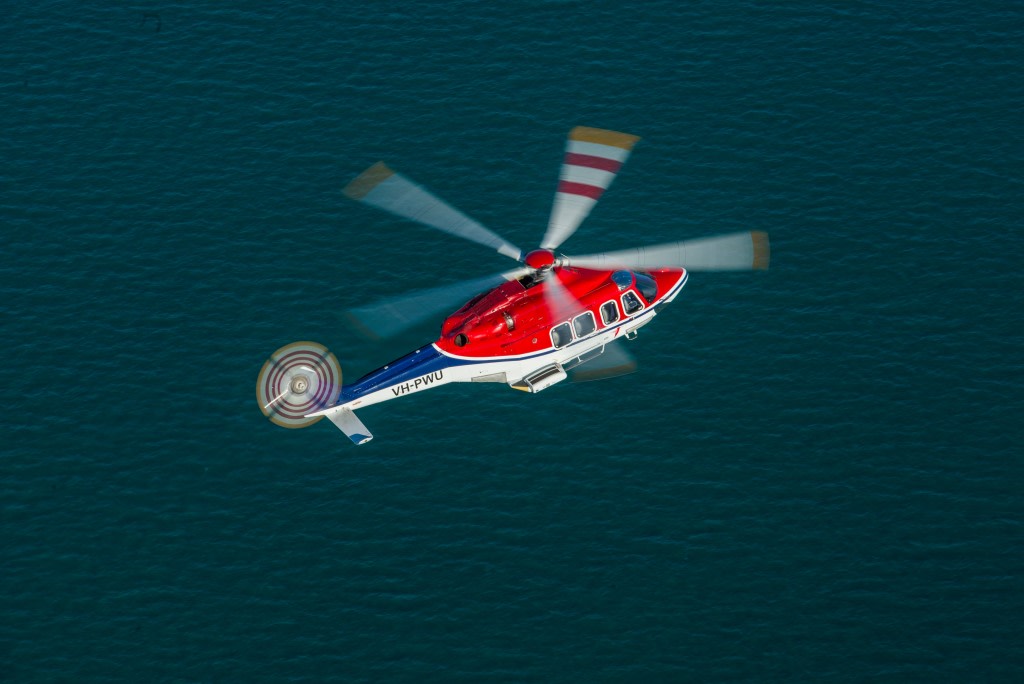
CHC is a global helicopter services company providing passenger transfers for oil and gas industries. We also provide search and rescue (SAR) and emergency medical services (EMS). In Australia, CHC has quite a diverse portfolio of customers. We have a helicopter sharing agreement in Karratha in the Pilbara region. So that’s a sharing agreement between several clients which we’ve held for over a year now. We had worked with each of the members and facilitated sharing of aircraft and reducing costs to customers beforehand so it was a smooth transition in. With that contract, we operate four aircraft; two AW189s and two AW139s. In Broome, we fly for Shell to their Prelude Floating LNG facility. Then we’ve got our on-shore programs, which are more SAR and EMS. We have provided services to the WA Department of Fire and Emergency Services (DFES) contracts for over 17 years. We’ve got three Bell 412s operating on the DFES contract. We also fly for the Royal Australia Navy out of Nowra (Albatross Base), and the Royal Australian Air Force across four bases and also for their deployments as required. We provide Army with Crash Response (CRH) and Aircraft Medical Evacuation (AME) services. We’ve got nine aircraft flying in total for the Australian Defence Force, seven AW 139s and two B412s. We are the premier operator of the AW 139 in Australia, we are proud to say that we’ve just completed 40,000, flight hours in that aircraft across O&G, SAR/EMS – it’s a great milestone achieved with excellent safety and an average availability of around 95 per cent to 98 per cent, consistently. Which is no small feat, that is a huge team effort.
Q: How have you managed to foster positive business relationships with your customers for such a long period of time, with such a high level of reliability?
For us, the most important thing is our relationship with our customers, and it is key to how we go about our business. Trust is built through transparency, and most of our customers would be able to tell you that at CHC we are transparent to a fault. We share even the most benign event or happening with our customers. Where possible we also provide value added services beyond providing aircraft, flying and maintaining them; for example, we have just provided one of our clients with our Crew Resource Management (CRM) training, which got glowing reviews. We also recently invited customers along to participate in our Human Foundations course so they too can benefit from the investment that we had made in developing this important course for our own people. This culture of transparency permeates throughout the business, even within our own teams; I am regularly on the road or in town halls explaining the actual factual business information with our tribe. We want everyone in CHC to treat the business as if it is their own, so we treat them as business owners and explain to them exactly where we are and where we need to get to. So when it comes to our workforce, our tribe, this culture of transparency, trust, combined with our emphasis on reimagining all facets of the business including safety leadership, is something really unique to CHC.
This content is available exclusively to Australian Aviation members.
A monthly membership is only $5.99 or save with our annual plans.
- Australian Aviation quarterly print & digital magazines
- Access to In Focus reports every month on our website
- Unlimited access to all Australian Aviation digital content
- Access to the Australian Aviation app
- Australian Aviation quarterly print & digital magazines
- Access to In Focus reports every month on our website
- Access to our Behind the Lens photo galleries and other exclusive content
- Daily news updates via our email bulletin
“For us, the most important thing is our relationship with our customers, and we believe that intimacy with the customers is key”

Q: You mentioned your emphasis on ‘safety leadership’, can you expand on that concept a little?
The way that the business world is at the moment we are seeing constrained oil prices and therefore constrained commercial pricing for helicopter services.
We continue to move forward at CHC with things like the Line Operational Safety Audit (LOSA), and we are the only company in Australia that actually continued on with that. We’re also leading the charge with the IOGP 690 – Offshore Helicopter Recommended Practices – and I’m pleased to say that we’ve invested already in what we need to become IOGP 690 compliant as fast as possible. There’s also the Real Time HUMS (Health Usage Monitoring System) that are installed onboard so we can get a sense in real time is there are any mechanical issues with the aircraft, so that not only saves us time, but it’s also a critical factor for safety, and that’s just to name a few.
We take a similar, proactive approach to safety and wellbeing with our staff too.
For the last three and a half years, we have developed and run a program called ‘Human Foundations’ programs that I mentioned earlier. They are designed and run with a corporate psychological outfit called Small Giants Advisory. It basically just teaches people how to think at a higher level, how to deal with their emotions, thoughts and feelings and how best to take wise action. They can understand why they’re thinking that way, and how to change and rewire their thinking. We use these techniques not only just survive through the tougher times, but go on a thrive beyond them. It’s basically teaching them how to recognise their current mindset and if it is not helpful in reaching their goal then they learn that they have the choice to change it.
So that program has been run for the last number of years, it was first run up at the senior management level, and has since been rolled out through most of our bases, we were about to introduce it into our final two bases right when COVID-19 hit.
Q: Speaking of safety and the outbreak of COVID-19, in much of the aviation world the pandemic appears to have changed operations for good. How has it had an impact on your business?
I suppose it was fortuitous that we ran those programs because all of that training really came to the fore. When first doing the training, people maybe didn’t quite understand yet where they might need to use it, but I’ve now had many people say that the human foundations courses that we did were great because it’s helped us get through this whole global pandemic. And the whole ‘unprecedented’ word that has been used so many times, and the uncertainty of it all, it causes stress and anxiety. Our tribe are perhaps better prepared for that. And that meant when we could just roll up our sleeves and get on with what it is that we need to get done
Most importantly, I believe it was our tribe’s ability to rally together and get things done, because the work didn’t stop. So we all had to work together to keep the business running, and do so with safety as the paramount factor. At CHC we introduced ‘bowtie assessments’ that were used to identify risks and activate protocols when carrying either suspected COVID-19 cases or confirmed COVID-19 cases on board. In Australia, we were the first helicopter services company to do that. So we formalised all of those procedures and we shared those protocols with the industry through Safer Together WA/NT and APPEA. Through that we shared the information with all our customers, but also with our competitors. When it comes to safety and wellbeing we are boundaryless.
“We were highly commended for doing that and for being innovative during those early COVID days”
Q: In that case, what does the ‘new normal’ look like at CHC Helicopters Asia Pacific?
So the new normal for us, is underpinned, thankfully, by the fact that we didn’t really need to change too much in terms of our operations. Obviously there was more cleaning, sanitising, and health checks, but much of our operations continued on as normal. Perhaps the biggest issue for us was navigating the closure of state borders. Our FIFO operations are in Western Australia, we have pilots and engineers that are east-coast based that work FIFO, so the changing rules and quarantine requirements made things tricky. Again, the commitment from the people within the tribe was incredible. I am still amazed and very humbled by the dedication shown by these folks.
There was tremendous commitment from people. Since we do our own travel planning, we also had our operations team juggling rosters, and trying to navigate those border closures across Australia. Because in the early COVID days, those restrictions were changing by the hour in some cases, so having to respond to that was pretty tough, but we got through it.
The pandemic has mostly just been a logistical headache. Though fortunately for us, we still haven’t had any COVID cases reported the Australian offshore oil and gas operations. In the North Sea, we introduced what was called a ‘COVID Copter’, which was a dedicated aircraft for handling patients and cases, but again, luckily we didn’t need to introduce any policies like that here. I think it was helped by the fact that our customers in the offshore oil and gas sector managed their own processes very well in terms of monitoring, quarantining and testing, on top of our own processes.
Want to see more stories from trusted news sources?
Make Australian Aviation a preferred news source on Google.
Click here to add Australian Aviation as a preferred news source.



