 iscover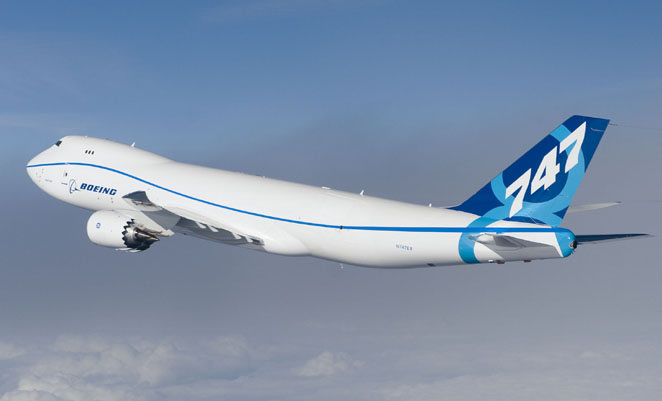
The International Civil Aviation Organization (ICAO) has cleared Boeing’s new 747-8 to operate at the same separation distances as its earlier 747-400, after the aircraft was classed as ‘Heavy’ for wake turbulence considerations.
An ICAO team of wake vortices experts from the US FAA, European Organisation for the Safety of Air Navigation (EUROCONTROL) and EASA analysed both simulated and flight test data for the 747-8, which was assessed for “landing, departure, climb/descent and cruise operation” wake vortex effects on other commercial aircraft, including a former Korean Air 747-400 used during the accreditation process.
This content is available exclusively to Australian Aviation members.
A monthly membership is only $5.99 or save with our annual plans.
- Australian Aviation quarterly print & digital magazines
- Access to In Focus reports every month on our website
- Unlimited access to all Australian Aviation digital content
- Access to the Australian Aviation app
- Australian Aviation quarterly print & digital magazines
- Access to In Focus reports every month on our website
- Access to our Behind the Lens photo galleries and other exclusive content
- Daily news updates via our email bulletin
- Unlimited access to all Australian Aviation digital content
- Access to the Australian Aviation app
- Australian Aviation quarterly print & digital magazines
- Access to In Focus reports every month on our website
- Access to our Behind the Lens photo galleries and other exclusive content
- Daily news updates via our email bulletin
“The safety case supports the assertion that the Boeing 747-8 is safely categorized as HEAVY. Consequently, the wake turbulence separation minima specified … for HEAVY aircraft should be applied,” ICAO said in a statement.
Boeing 747 program engineering vice president Todd Zarfos said achieving the ICAO heavy designation was an “important accomplishment for the 747-8 program”, which will allow the aircraft “to operate in the same markets and routes they use for the 747-400″.
“We did extensive testing to show that even though the 747-8 is longer, heavier and has a bigger wingspan than the 747-400, it does not create greater wake vortex effects. That means that airports will be able to operate more efficiently and not have to slow down operations to accommodate this airplane,” Zarfos said.
Want to see more stories from trusted news sources?
Make Australian Aviation a preferred news source on Google.
Click here to add Australian Aviation as a preferred news source.