
 iscover
The aviation industry in Australia is constantly at risk of cyber threats. In response, airlines and airports must implement strict cybersecurity measures.
This content is available exclusively to Australian Aviation members.
A monthly membership is only $5.99 or save with our annual plans.
- Australian Aviation quarterly print & digital magazines
- Access to In Focus reports every month on our website
- Unlimited access to all Australian Aviation digital content
- Access to the Australian Aviation app
- Australian Aviation quarterly print & digital magazines
- Access to In Focus reports every month on our website
- Access to our Behind the Lens photo galleries and other exclusive content
- Daily news updates via our email bulletin
- Unlimited access to all Australian Aviation digital content
- Access to the Australian Aviation app
- Australian Aviation quarterly print & digital magazines
- Access to In Focus reports every month on our website
- Access to our Behind the Lens photo galleries and other exclusive content
- Daily news updates via our email bulletin
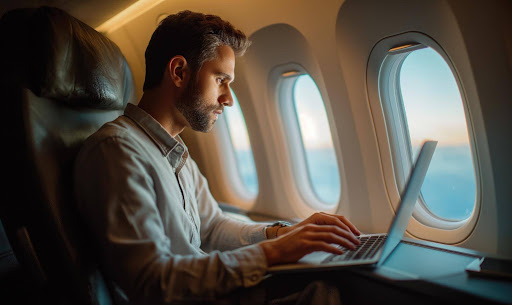
Aviation professionals have never been more connected. Pilots, engineers, and airline staff depend on digital systems to complete their jobs. Aviation today wouldn’t be possible without digital help. In addition, airlines process vast amounts of passenger and financial data to operate. The high data levels make the aviation industry a prime target for cybercrime. Aviation professionals must take steps to protect their data — both on the ground and in the air.
Aviation’s Growing Cyber Threat Landscape
Many data breaches have made headlines in recent years. One example is the Qantas incident in 2025. According to the Australian Privacy Commissioner, the attack affected approximately 5 million Australians.
The breach resulted from a social engineering attack against a third-party provider. The attacker claimed he was a “Qantas IT help” representative. They managed to convince a call centre agent to access the company’s CRM system. The hackers stole information such as customer email addresses and phone numbers.
The attacker was unsuccessful in obtaining financial or passport information. However, the scale of the breach highlighted the damaging possibilities of aviation attacks.
The Risks Facing Aviation Professionals
Airlines invest a lot in cybersecurity. 66% of airlines and 73% of airports identify it as their top priority. Despite robust cybersecurity measures, employees remain a prominent attack vector.

The most common risks include:
Phishing Attacks
Cybercriminals often impersonate other airline professionals to convince employees to complete specific actions. Thanks to AI, attackers can create convincing emails that read as though they’re from a partner.
The Misuse of Personal Devices
Aviation professionals are always on the move. They often have to use their personal phones and laptops for work purposes. If devices lack adequate protection, they can become gateways for hackers. That’s why employees often install VPNs to secure their data while in transit. The top-rated VPN options now come with next-gen antivirus that can help aviation professionals avoid phishing and malware attacks.
Compromised Third-Party Vendors
Airlines rely on software providers, maintenance companies, fuel suppliers, and ground handling services. If attackers breach one vendor, they can gain access to the airline’s data.
Public Airport Wi-Fi
Professionals who connect to public airport Wi-Fi can expose themselves to malicious hotspots. Airports have introduced separate private networks for professionals to combat public Wi-Fi weaknesses.
The Steps Aviation Organisations Are Taking to Protect Sensitive Information
Airlines and airports have expanded their cybersecurity programs in recent years, but there is still room for improvement.
Stringent Air Traffic Control Systems
Compromised air traffic control systems could have a catastrophic impact. Senior personnel install stringent access controls and communication encryption. Systems are also put in place to protect air traffic control in the event of a cyberattack.
Zero Trust Network Architecture
Zero Trust Network Architecture (ZTNA) removes all trust from a network. All users, devices, and connections must verify themselves. ZTNA applies to those both inside and outside the airline’s corporate perimeter.
Robust Airport Networks
Creating secure airport networks for aviation employees is essential. Networks include robust firewalls and advanced intrusion detection systems.
Passenger and Airport Data Protection
Aviation companies use advanced cybersecurity and privacy frameworks. They do this to protect passenger and airport data. Frameworks include strict encryption rules, access controls, and data storage.
Continuous Security Monitoring
Aviation organisations track their cybersecurity systems to identify potential entry points. Security professionals identify and deal with vulnerabilities and threats in real time. Regular penetration testing is also carried out.
Staff Cybersecurity Awareness Training
Training sessions include gamified e-learning and role-specific modules. Managers tailor the training to different audiences — from flight crews to engineers.
Making Basic Cybersecurity Principles Mandatory
Employees must create strong, unique passwords for each of their accounts. They should store passwords in a password manager and activate multi-factor authentication.
Looking Ahead
Cybersecurity remains one of the industry’s most important operational challenges. Emerging technology will continue to make aviation more efficient. It will also increase the number of potential security threats.
As security risks increase, airports will have to invest in protecting sensitive data. Between now and 2030, the aviation cybersecurity market will grow by 8.6%. The growth suggests that the aviation sector now deems cybersecurity a fundamental investment.
Want to see more stories from trusted news sources?
Make Australian Aviation a preferred news source on Google.
Click here to add Australian Aviation as a preferred news source.