
 iscover
Safe & sound
 0 comment


Design, certification and manufacturing create high-tech airline cabin challenges
Sit down in your airliner seat, buckle up, and contemplate the seat back in front of you. Over decades, and at a cost second only to the price of the airframe itself, that seat has been engineered to ever-stricter standards to save your life several times over. So has everything attached to it, as well as the bins, bulkheads, sidewalls and ceiling of the cabin. And it’s all made of brand-new, high-technology materials.
The cabin’s importance to commercial aviation, and the cost of creating and manufacturing new seats and interiors, is even driving the size and shape of future airliners, in a change to the outside-in model used since the dawn of the industry.
This content is available exclusively to Australian Aviation members.
A monthly membership is only $5.99 or save with our annual plans.
- Australian Aviation quarterly print & digital magazines
- Access to In Focus reports every month on our website
- Unlimited access to all Australian Aviation digital content
- Access to the Australian Aviation app
- Australian Aviation quarterly print & digital magazines
- Access to In Focus reports every month on our website
- Access to our Behind the Lens photo galleries and other exclusive content
- Daily news updates via our email bulletin
- Unlimited access to all Australian Aviation digital content
- Access to the Australian Aviation app
- Australian Aviation quarterly print & digital magazines
- Access to In Focus reports every month on our website
- Access to our Behind the Lens photo galleries and other exclusive content
- Daily news updates via our email bulletin
Developing new lightweight and technologically advanced materials, using them in a diverse range of seating options, certifying them under increasingly stringent safety standards, and ensuring that they can be produced at scale make up an engineering challenge that has, in many high-profile examples, proven too much for some suppliers in the industry.
It’s an engineering challenge that needs new engineers as a generation retires, and as consolidation in the industry among growing giants like UTC-Rockwell Collins or Zodiac-SAFRAN continues, it’s also a challenge that requires those engineers to come from a polyvalent range of backgrounds.
Let’s go back to your airline seat, but imagine now that the jet you’re travelling in has just come to a full stop after an incident like Asiana flight 214, which struck the seawall at San Francisco International Airport in 2013 at full landing speed, spun through the air at an inclined angle and slid along the ground nearly a full 360°.
Your seat just saved your life, as it did for 99 percent of the 291 passengers on that aircraft.
Of the three passengers who died, according to the official inquiry, who are referred to by seat number, “The NTSB concludes that passengers 41B and 41E were unrestrained for landing and ejected through the ruptured tail of the airplane at different times during the impact sequence. It is likely that these passengers would have remained in the cabin and survived if they had been wearing their seatbelts.”
For the third, “the NTSB concludes that passenger 42A was likely restrained for landing, and the severity of her injuries was likely due to being struck by door 4L when it separated during the airplane’s final impact.”
But how did the seating on that aircraft get there?
Seat impact certification is an astounding challenge
“There are different kind of certification testing to perform during a development,” explains German seatmaker Recaro through its director of global marketing and communications, Mónica Fischer. “The main testing categories are dynamic testing, static testing and environmental testing, including flammability testing. Within the dynamic testing on a test sled with aircraft test dummies you are mainly distinguishing between structural testing — 16g forward and 14g downward testing — and occupant injury testing.”
That occupant injury testing is continually redeveloped with new technology, and includes criteria around injuries to the head, neck, femur and lumbar load areas to the dummy and, thus, to you as you sit in your seat. Airline seats are certified to a variety of impact requirements, usually measured in a g-force multiplier, comparing an acceleration to that of gravity at sea level.
Most larger (and many smaller) seatmakers will have their own internal testing facility, as Fabio Liccardo, technical director for Italian supplier Geven — which this April announced sales of over thirty thousand seats to the Lufthansa Group’s three hub airlines and European low-cost carrier Wizz Air — outlines.
“Geven installed a dynamic sled in its facility in 2002, and very likely that has been a major stepping stone to the company’s fast growth and has also led us down the path of on-time certification and subsequent 100% on-time delivery record,” Liccardo tells Australian Aviation. “In case of urgency our test facility would work two shifts for four to five tests per day, six days per week…that is really an impressive amount of crashes!”
The type, sizing and nature of the dummy used has also been evolving, and seats are no longer engineered just for the average North American male of approximately 1m80 and 80kg.
“We have a lot of standard 50th percentile male Hybrid II dummies,” Liccardo explains, adding that Geven also uses “two large male 95th percentile Hybrid III and a small female 5th percentile Hybrid III dummy.”
Compared with military aviation, Liccardo notes, “Large dummies are now more than in the past used for military projects where a customer asks to qualify the seats for passengers that may weigh up to 250lbs.”
Across the industry, a broad expectation is that certification to 16g for every component of seating products, compared with separate certification at lower levels for some parts of some designs, will become mandatory.
Non-impact certification is growing, and is complicated
Back to your seat on that now-burning crashed aircraft. Once that manufacturer’s seat has saved your life on impact, it’s time for it to do it again, through flammability and smoke requirements.
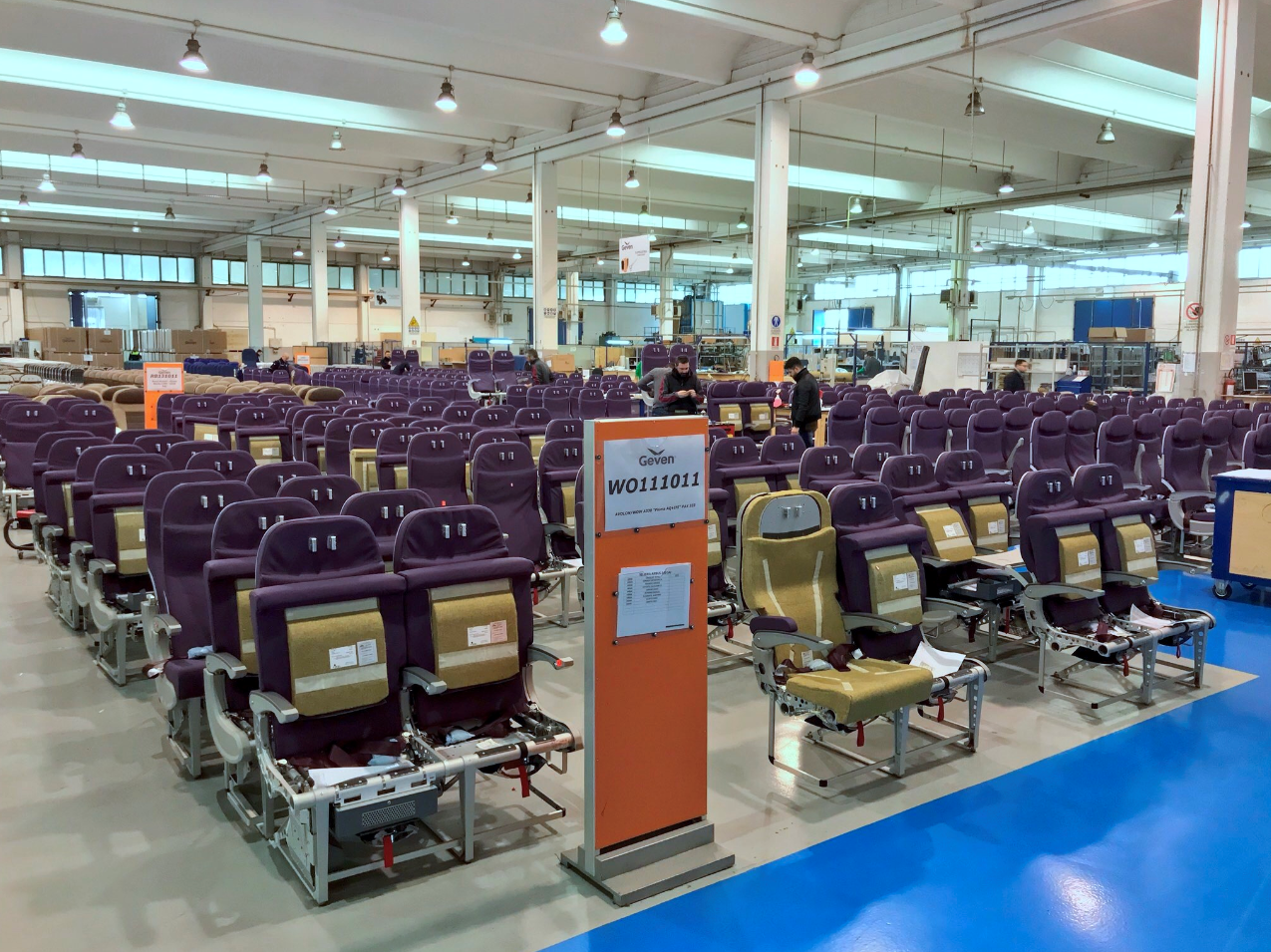
“Flammability plays also an important role in the certification process,” notes Geven’s Fabio Liccardo. “Both the oil burner test of the seat cushion and the smoke density test of all materials and compounds are performed in our test facility. The heat release rate test is outsourced and it also plays an important role when we decide about the use of new non metallic materials.”
Many of those materials are produced by companies like Boltaron, a US-based supplier of an increasingly varied range of high-tech thermoplastics.
“At Boltaron, we are focused on engineering for flammability requirements and impact resistance,” Chris Corona, North America aerospace business segment manager, tells Australian Aviation. “Every batch of Boltaron materials we send to our partner manufacturers is lot-tested to meet stringent FAA standards for either — or a combination of — flame resistance, smoke, and heat release. Developing new materials that do not meet these requirements would be a non-starter for our customers. As far as impact resistance, we work closely with seat manufacturers to provide them with material options that excel at ASTM impact test standards, which we find correlates very well into the real world.”
ASTM is the former American Section of the International Association for Testing Materials, and manages nearly 13,000 global standards for a wide variety of materials, including those used in aircraft — and not just for seats. Every part of the interior must meet both flammability and impact standards, from the sidewalls to the ceilings, from the lavatories to the bulkheads to the galleys.
Seatmakers also test for durability. “Abuse and cyclic tests fatigue each part of the seat in order to expose any potential defects of the seat during its lifecycle and to correct them before the entry into service,” Geven’s Fabio Liccardo says.
A little-known set of requirements surround decompression venting, explains Ben Orson, Managing Director of the London practice of of JPA Design, a specialised transport design house that frequently designs new seats, most recently Singapore Airlines’ new Airbus A380 products already serving Australia. “In a decompression situation where the aircraft is looking to vent air outside of the fuse lodge in a safe way to prevent the fuse lodge tearing, you have the decompression vents, which sit at the intersection between the floor and the side wall. Air has to be able to flow through those.
One of the challenges that we’ve had in the last 10 or 15 years is that, from a passenger experience perspective, we’ve wanted to build more and more furniture into those spaces to deliver functionality, typically storage, ottomans, that sort of thing that tend to sit up against the side wall.”
‘From a passenger experience perspective, that’s not always your first choice.’
Ben Orson
“But at the same time,” Orson notes, “we need to leave those vents unimpeded so that they can do the job they have to do in an emergency. What that means is we have to add a lot of grills and holes into the furniture to allow the air to flow through. And because a direct airflow through that space is preferable, then what you’d ideally be doing is punching a lot of big holes in the side of your furniture. Obviously, from a passenger experience perspective, that’s not always your first choice. Reconciling those two things is quite a challenge.”
Most recently, certification authorities have been grappling with new and improved requirements from airlines and their seatmakers, including for bleeding-edge materials.
What does ever-more densified business class seating do to a dummy — which, let’s remember, takes the place of a human skull and spinal cord — if a business class seat is positioned at 20° to the aircraft centreline, especially since most requirements were created for seats facing forwards in previous decades?
What happens with the latest full height suites, like Emirates now offers on its latest Boeing 777-300ER, in terms of passenger supervision, crew direct view of the passenger, evacuation, and security? And how can regulators be more responsive, avoiding allegations like those levelled at the US Federal Aviation Administration of being a “tombstone agency”, responsive only after passenger deaths?
The head injury criterion, a key requirement, is evolving and posing new challenges
Perhaps the best known requirement of seat certification is the head injury criterion, which monitors the acceleration and impact of the dummy on the seatback in front of them.
“The Head Injury Criterion (HIC) has not changed over the years. HIC is an injury criteria that is dependent on the human body,” EASA tells Australian Aviation through its spokesperson Dominique Fouda. “The FAA and EASA have recently introduced occupant injury criteria that are based on the evolution of research and certification testing in other domains of the automotive industry. At the moment this is limited to the projects in which EASA needs to raise special conditions to address the installation of side-facing seats or seats equipped with airbag, and involve the need to consider neck injury criteria.”
Meanwhile, EASA notes, specific aspects of the testing have thrown up more scrutiny, especially with new enablers like high-tech dummies featuring new sensors. “The neck injury criterion (NIJ) is currently getting more attention as there is a tendency to install more and more angled seats. EASA and the FAA have a fully harmonized position on the need to consider neck injury criteria — Nij and neck rotation — for oblique seats and side-facing seats installation. However, the assessment of neck injury criteria for the occupants of forward and aft-facing seats is currently not required by CS-25 and is therefore limited to very critical interactions observed in the tests conducted to meet head injury criteria.”
“HIC is becoming a common risk for any certification campaign,” Geven’s technical director Fabio Liccardo says. “Due to the size of the backrest screen getting bigger and bigger, and with all the new options that can be installed on the backrest — amenity pockets, tablet-holder and so on —, there is growing concern among engineers any time the sled is fired for an HIC test.”
“At the moment neck injury is not part of the pass/fail criteria for HIC certification,” says UK-based seatmaker Acro’s senior vice president of sales Alan McInnes. “However, the authorities — EASA or the FAA — could require a neck investigation if, during the HIC event, the head experienced a large backwards rotation. This is a topic of discussion at the moment at the SAE [formerly Society of Automotive Engineers] events that are attended by all the major seat manufacturers, Airbus, Boeing, EASA and the FAA.”
“The latest Hybrid III dummies are designed to measure neck injury and we certainly see the industry moving in this direction in the future,” McInnes says. “It will start to drive the design of the seatback, shroud and table. Not only does the seat system need to pass the HIC criteria but any features in the design of the seatback that could cause the head to rotate aggressively backwards would also need to be analysed.”
Looking to the future, says Geven’s Fabio Liccardo, “the FAA and EASA would like to upgrade the passenger safety in case of emergency landing with the introduction of additional checks like neck bending evaluation and more. Many solutions adopted in the past, like the bifold rear meal tray table and several different backrests, have to be avoided or re-thought to meet the neck criterion, so preliminary tests or simulations are needed in order to witness what the head-neck behaviour is. In particular cases, where a video review would be not enough, the use of a dedicated dummy — Hybrid III equipped with neck load cells — is needed to verify what the clearance of the neck injury criterion is.”
Sub-suppliers like thermoplastics manufacturer Boltaron are also part of the solution, says Chris Corona, the company’s North America Aerospace Business Segment Manager. “With the advent of HIC, Boltaron has developed high-impact resistant seat back material options (9815E) to allow for seat manufacturers to reduce sheet thickness and weight in the seat back, without sacrificing the seat’s ability to pass HIC. Being able to provide a sheet with 50% greater impact resistance has really allowed seat manufacturers design options they never would have had with current HIC standards.”
Airline design desires almost ignore the engineering challenges
There is, says Daniel Baron, managing director of Tokyo-based Lift Strategic Design, “a lack of awareness at the top of some airlines and suppliers about consumer trends and preferences. Every consumer now expects phones and cars and hotels and cafes, even fast food chains, to be oozing wow factor, so to say they expect nothing of the cabin implies a need for more information to understand the larger context. That said, the airlines and suppliers who get it really do get it, and are doing amazing things.”
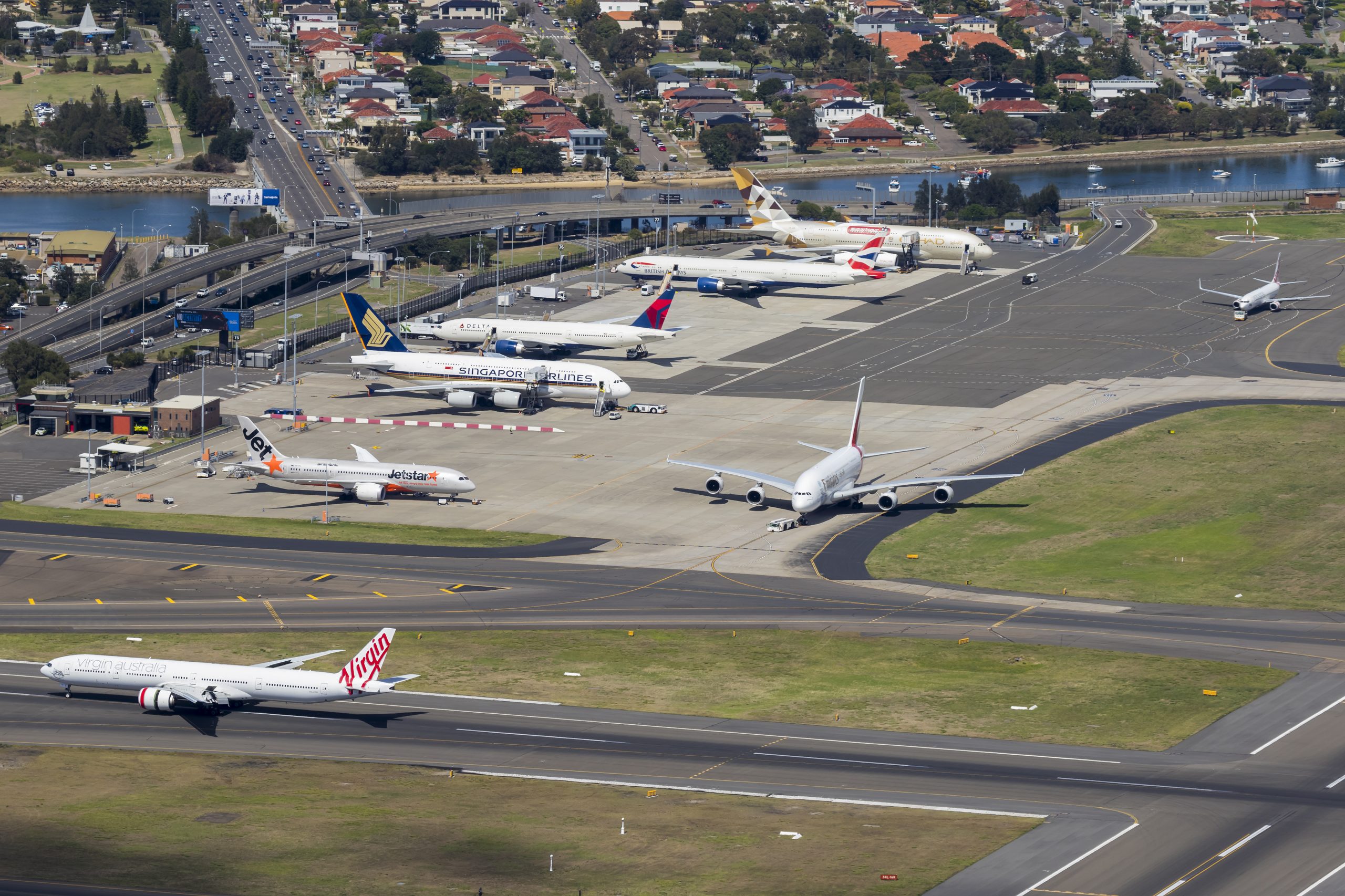
“Interiors are becoming an ever more important part of aircraft design, despite the fact that we don’t currently see any large-scale all-new aircraft programs in the industry,” explains Lukas Kirchner, a spokesperson for the Hamburg aviation cluster of companies, which make up a large proportion of the global interiors industry. “We do however see a huge backlog in aircraft orders and a lot of activity picking up in the retrofit market, so airlines make more use of the aircraft interiors as a differentiator for the product, especially on long-haul, as well as for the operations itself, saving fuel and increasing revenue through the use of new materials and components — structures such as cabin dividers, slim-line seats to increase seating capacity, and so on.”
Boltaron provides many of those materials, and the technology behind them is pushing ever forwards, explains Director of Business Development John Inman. “As many airlines have opted to go toward similar business class seating programs from the large seat manufacturers, airlines have come to us asking for new and exciting ways to help them convey a brand message in those seats. At Boltaron we have been extremely successful developing branded translucent panels that are not only functional in giving you that sense of privacy on a long flight, but also help convey the brand message of an airline in new ways. These requests have pushed Boltaron to develop new technologies to, for instance, imbed a branded pattern within a translucent panel, and then apply various surface finishes to give frosted effects.”
“One unique challenge we’ve had to overcome, which seems now to be an emerging category, is forming and fabricating our decorative materials so that the finished geometry of the part maintains an acceptable registration and orientation with the decorative graphic in order to achieve the designers’ aesthetic goal and criteria,” explains Inman’s colleague, Director of Product Development Mike Robinette. “In order to do so, we’ve developed some unique forming and CNC trimming techniques to overcome these sorts of challenges. One such product is the decorative trim shroud on the United Airlines Polaris seats, and we are currently developing several more products this year.”
A growing challenge, says Boltaron’s Inman, is “keeping the same general style and general trim and finish colors throughout the cabin but providing a changing level of perceived luxury from first class to economy cabins including business class and premium economy.
What does that look like? “Supplying high end automotive textures in metallics and pearlescents, through to smoother standard finishes all in same color palette whilst repeating brand images in galleys, privacy and brand panels,” is one option, says Inman. “Many of the challenges currently relate to responding to the desire of airlines to differentiate their product in the market. Meeting certification standards such as flammability, smoke and heat release is taken as read, so it is the weight, strength and aesthetics of the sheet where the challenges are.”
Engineering, design and industry synthesis experience is hard to come by
“Particularly at startups or airlines whose top people have little industry experience when they joined, executives may think ‘here’s the cash, so just hurry up and give me my wow — now!’” Lift Strategic Design’s Daniel Baron jokes. “We still face lack of understanding of the amount of time required for engineering and product design, certification, production and delivery. All parties must do a better job of communicating from the get-go exactly the big picture behind lead times.”
Seatmaker Recaro agrees. “There are a lot of interdependencies between the different modules which have to be carefully managed to reach a maturity level which allows you to offer this product to the market. One of the recent challenge within engineering has been the development and certification of our new long-range business class seat, CL6710. Today’s long-range business class seat is becoming a system, combining not only an innovative and individual seating kinematic, but completing it with a furniture shell with several additional amenities in order to provide a maximum of comfort experience.”
A growing number of airlines turn to outfits like Baron’s Lift Strategic Design, Tangerine, Acumen, Factorydesign, or JPA Design, to help them design, engineer and manufacture new products, as well as to integrate new technologies.
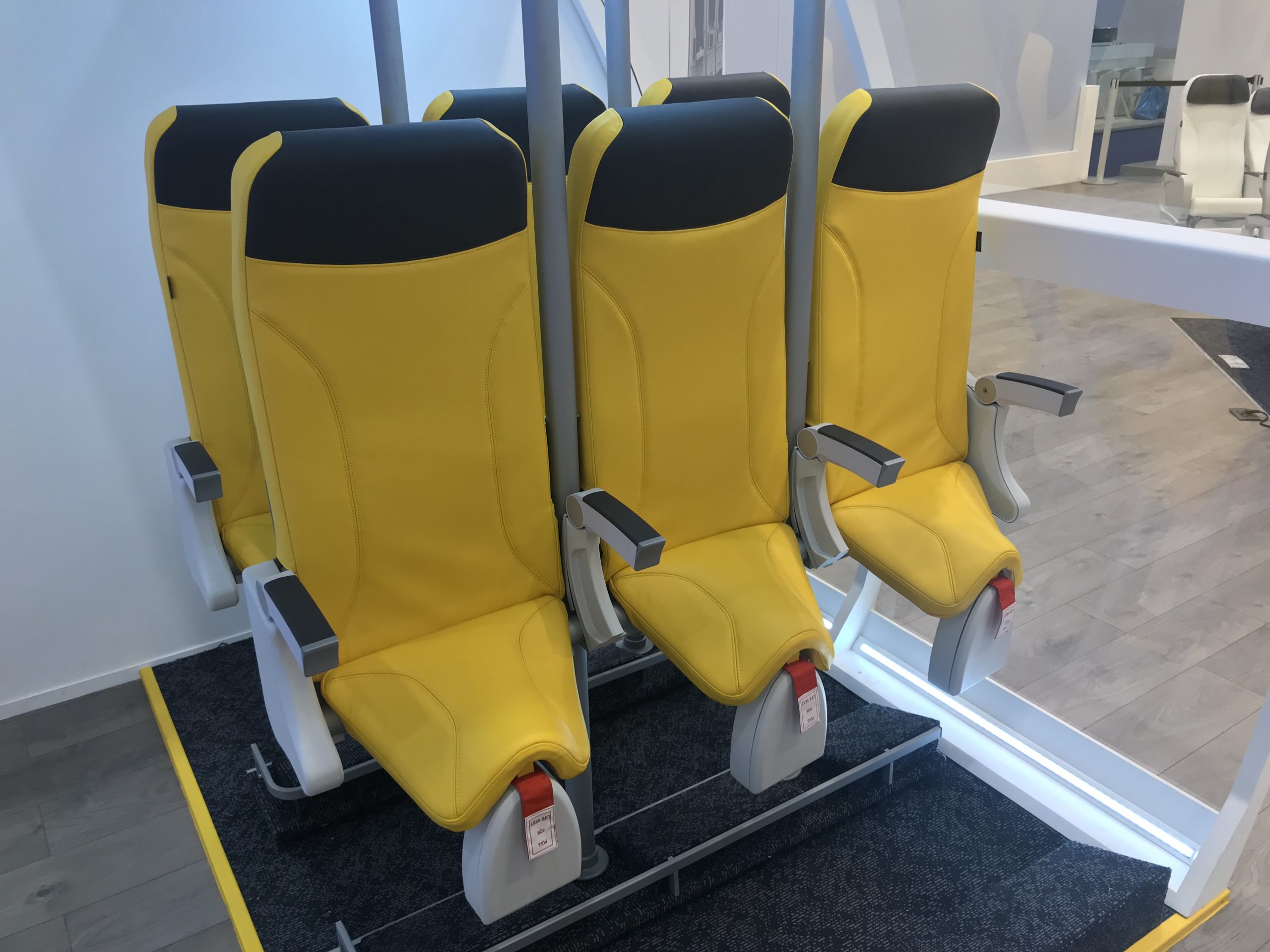
“Typically, in a very simplistic way,” says JPA managing director Ben Orson, “we will take the idea from whatever it comes from — a piece of research, from a concept that we’ve generated, from a want from an airline — and we’ll start to design what that looks like in terms of the form, how it functions, what the materials and colors are, what the experience is like of using it. And then we’ll develop that typically up to a point where we can share it with a manufacturer, which normally means a 3-D CAD [computer aided design] model.”
“Then that CAD model, along with material specification is shared with the vendor, and they will then be in charge of creating their own version of it without making too many compromises, hopefully. In working with us to develop it, we’ll typically collaborate with the vendors on every project very, very closely to make sure our design intent is maintained,” Orson explains. “As and when issues come up, which they always do in one shape or form, the solutions are something that works for all parties. We’re not precious about our designs. We realize they have to be made. If we’re doing our job properly, then our goals and the production engineer’s goals are well aligned.”
“I think that’s why companies like ours that have a lot of experience are good to work with because we, from day one, our goals are not fundamentally misaligned with the people that make them, because we know what the constraints that they’re under look like,” Orson concludes.
Filling the cabin interiors engineering pipeline is a major concern for the future
The airline industry is facing a key engineering crunch. Across the seatmakers, regulators, design houses, suppliers and airlines Australian Aviation speaks to regularly about cabin interiors, all are concerned about a lack of appropriately qualified — and cross-qualified — engineering or technical talent, and many are taking steps to train their own internally.
A lack of cabin interiors engineers, says Daniel Baron from his Tokyo studio, “is really critical and needs to be addressed at local, regional and national levels. Suppliers and educational institutions should join forces and do a much better job of familiarising young people with the cabin interior design and engineering universe, fund courses for it and internships in it. This will go far to shift perception and attract new talent.”
In Hamburg, says the city’s aviation cluster group, “the challenge is to adjust education systems and curricula in a way that graduates meet the rapidly changing industry demand. With the shift towards a digitalized Industry 4.0, companies do not only have to adapt their ways of manufacturing, but also their engineering as a whole. This is particularly important for the field of SMEs, where there are oftentimes only limited resources available to focus on strategic HR projects. Hamburg is trying to meet this with site-wide and large-scale new projects such as DigiNet.Air and new infrastructures like the Center of Applied Aeronautical Research’s ZAL TechCenter, where corporates, SMEs, universities and research institutions work together on eye level, and a culture of open innovation and exchange is being fostered.”
“The aviation industry is consistently growing; it is both an opportunity and a challenge,” says EASA. “The challenge is less the quantity than the versatility of these resources in a fast-changing environment: our software engineers need to learn artificial intelligence, our propulsion engineers need to be ready for electrical propulsion, and our structure engineers need to assess the specific risks associated with the ageing structures made of additive manufacturing.”
Says US thermoplastics manufacturer Boltaron’s John Inman, “I am lucky enough to work with my wife who is an engineer, and my daughter is studying for an engineering degree too. However, I am concerned about the number of women entering this field. Engineering needs to become more appealing — encouraging technical subjects for all at school and showing their necessity and application in the real world is important.”
Want to see more stories from trusted news sources?
Make Australian Aviation a preferred news source on Google.
Click here to add Australian Aviation as a preferred news source.




