
 iscover

The Qantas Group will continue to focus on cost‑cutting. seth jaworski
Preflight
 0 comment


Qantas fleshes out post-transformation focus on costs
Qantas is aiming for cost savings of $400 million a year for the three years to 2019/20 as the Boeing 787-9 replaces older 747-400s and the use of new technology and innovation supports a more efficient operation both on the ground and in the air.
The airline group spelled out the target at its investor day presentation to the financial community on May 5.
This content is available exclusively to Australian Aviation members.
A monthly membership is only $5.99 or save with our annual plans.
- Australian Aviation quarterly print & digital magazines
- Access to In Focus reports every month on our website
- Unlimited access to all Australian Aviation digital content
- Access to the Australian Aviation app
- Australian Aviation quarterly print & digital magazines
- Access to In Focus reports every month on our website
- Access to our Behind the Lens photo galleries and other exclusive content
- Daily news updates via our email bulletin
The $400 million in gross annual benefits would more than offset expected annual inflation of $250 million in the three financial years to June 30 2020, Qantas said.
“This is driven around a lot of new technology, a lot of existing changes to our businesses and how we operate them,” Qantas chief executive Alan Joyce said during the company’s investor day held at its Mascot headquarters.
“There are revenue benefits to this as well as costs.”
The company reaches the end of its three-and-a-half-year transformation program on June 30 2017 that it says has reduced costs by $2.1 billion and improved operating efficiencies in the business through higher aircraft utilisation, a 5,067 reduction in staff and the withdrawal of older aircraft such as the Boeing 767, among other measures.
The next phase of the effort on costs will continue to focus on the use of technology, supplier costs, aircraft utilisation, continuous improvement and indirect costs, according to the slide presentation from the investor day.
“For transformation, it is all about sustainability,” Qantas group executive for strategy, transformation and IT Rob Marcolina said.
“While this particular program is nearing completion, we recognise the need for transformation is not over and we’ve been planning for transformation beyond FY17 for some time.
“Like transformation, innovation is equally important to the future success of Qantas. We believe that we are in good shape.”
Estimates for 2017/18 in the slide presentation indicated $98 million of savings had already been pencilled in through initiatives implemented previously such as revenue management, fleet changes in Western Australia, engineering optimisation and commercial sourcing.
Further, $127 million in savings are being implemented in areas such as digital strategy, schedule recovery and consolidation of ground services equipment. Marcolina said the focus for 2017/18 and beyond centred on three main points.
“First, transformation will continue to be a major contributor of our margin advantage,” he said.
“Second, that we do have a robust and evolving list of opportunities categorised not only in our transformation pipeline but we also have an ideas funnel which enables all ideas to be captured and worked through.
“And third, we do have the right processes forums and tools to ensure that we drive these initiatives to benefits.
“Our people don’t want to go back to 2014, they are really energised about the future and many of the plans that you will hear about today. But they also recognise the need for ongoing change.
“We believe with this focus on transformation that we are going to continue to position Qantas competitively going forward.”
Qantas domestic chief executive Andrew David noted during the investor presentation the airline’s cost per available seat kilometre (CASK) was now just three per cent higher than its domestic rival Virgin Australia, compared with 18 per cent higher three years ago. It was understood Virgin has a different assessment on its domestic CASK relative to Qantas.
Qantas said in a trading update on May 4 it anticipated reporting a fall in underlying profit of up to 11 per cent for the full 2016/17 financial year as competition on international routes and weakness in the resources sector pressured revenues.
Underlying profit before tax (PBT) for the 12 months to June 30 2017 was expected to come in between $1.35 billion and $1.40 billion.
“This reflects improving performance from Group Domestic and Qantas Loyalty partially offsetting a relatively weaker, but resilient, Group International performance in a highly competitive market,” Qantas said.
The 2016/17 figure would be between 8.5 per cent and 11 per cent lower than underlying PBT of $1.53 billion achieved in 2015/16, which was the highest result in the company’s history. Underlying PBT excludes one-off items and was regarded as the best indication of financial performance.
Joyce said the full year guidance, if realised, would represent the second best result in the company’s history.
While conditions were “still tough” in the international market given capacity growth was helping keep fares low, Joyce said they had eased slightly in recent times.
F-35A, P-8A buys to top Defence project expenditures for 2017-18

Budget allocates over $1 billion to F-35 acquisition in 2017-18
Defence will spend $6.6 billion on its Top 30 major acquisitions programs in 2017-18, budget papers show.
Of that total some $1.1 billion (over 17 per cent) will be spent on the F-35 Joint Strike Fighter, as acquisition of the RAAF’s next fighter begins to ramp up considerably. The acquisition of 72 F-35As under Project AIR 6000 Phase 2A/2B has a total budget of $16 billion, of which $1.5 billion will have been spent through to June 30 this year, the Portfolio Budget Statements show.
“Major activities during 2017‑18 will include: progressing the production of Australia’s next eight F-35A aircraft, including delivery of four aircraft; commencing the procurement of a further eight F-35A aircraft; continue maturing the development of a sustainment model for Australian-based support; commencing detailed planning and support for the ferry of the first two Australian F-35A aircraft to RAAF Williamtown in 2018; and Australian pilots and maintainers,” the budget notes.
The budget also records the planned wind down in F/A-18 classic Hornet flying hours as the F-35 fleet builds up, falling from 16,700 in the current financial year to a planned 4,750 hours in 2020-21.
Meanwhile $853 million will be spent in 2017-18 on the ongoing acquisition of the P-8A Poseidon maritime surveillance aircraft, with a further aircraft planned for delivery in the next financial year.
“Major financial requirements in 2017-18 relate to the delivery of aircraft, aircrew and maintenance training devices, an operational load management system, air-to-air refuelling clearance activities, spares and transition training,” the PBS reads of the $5.3 billion AIR 7000 Phase 2 acquisition of 12 P-8As to replace the RAAF’s AP-3C Orions.
Elsewhere 10 Pilatus PC-21 trainers are due to be delivered in 2017-18, the budget notes, as $239 million is spent on the AIR 5428 Pilot Training System Program (out of a total budget of $1.2 billion).
“During 2017-18, 10 training aircraft and four flight training simulators will be delivered.
Installation of an associated learning environment will commence at RAAF Base Pearce, WA, and one will be completed at RAAF Base East Sale, Vic, enabling RAAF to validate training material,” the budget states of AIR 5428.
Meanwhile, the Portfolio Budget Statements for Defence list 20 projects to be considered by government for first pass approval and 37 for second pass approval in the coming financial year.
Projects slated for first pass approval include an AEGIS capability upgrade for the Navy’s forthcoming Air Warfare Destroyers under SEA 4000 Phase 6, likely to be the new Aegis Baseline 9 standard; upgrades for the RAAF’s P-8A Poseidon maritime surveillance aircraft currently under delivery to the forthcoming Increment 3 standard (which will improve the aircraft’s abilities to search and track submarines and surface ships, as well as improving signals intelligence and networking capabilities); and upgrades to the Navy’s Anzac frigates’ CEAFAR radar under SEA 5010 Phase 1.
No fewer than 37 projects are planned for second pass (ie final) approval in 2017-18, including upgrades for the Tiger ARH under LAND 9000 Phase ARHCAP; weapons and countermeasures for the RAAF’s F-35 Joint Strike Fighters under AIR 6000 Phase 3; and the likely acquisition of the Northrop Grumman MQ-4C Triton under the AIR 7000 Phase 1B Multi-mission Unmanned Aircraft System program.
The Portfolio Budget Statements note that the Integrated Investment Program, first released in February 2016 alongside the 2016 Defence White Paper “has been reviewed and updated to reflect the best available information in respect to project planning, delivery reality, cost estimates, phasing, and other important judgments and assumptions critical to the delivery of the capital investment portfolio.”
However the budget does not mention when or if the updated IIP will be publicly released.
Jetstar A320s gain six more seats

Jetstar is boosting the capacity on its Australia and New Zealand-based Airbus A320 narrowbodies through the installation of slimline seats, reducing galley space and moving the lavatories.
The Qantas-owned low-cost carrier (LCC) will reconfigure 43 A320s – which operate domestically within Australia and New Zealand, across the Tasman and on short-haul international routes – with new Recaro seats and the Zodiac Aerospace Space Flex version two lavatory and galley module, which allows the removal of the existing rear lavatories.
That will allow an increase in the number of seats to 186, up from 180 currently, which is equivalent to a capacity increase of one and a half A320s but without the capital costs of acquiring additional aircraft, Jetstar group chief executive Jayne Hrdlicka told the Qantas investor day on May 5.
The cabin reconfiguration work will also increase overhead locker storage, add LED cabin lighting, new carpets and a new colour scheme.
Jetstar Australia and New Zealand chief executive Dean Salter said passengers will have the same amount of legroom and space despite the addition of another row of seats on the aircraft, with no change to average seat pitch or seat width.
“This is the latest cabin design from Airbus, which is smarter about the way space is used on the aircraft and allows for an extra row of seats and more baggage space,” Salter said in a statement on May 5.
“The additional six seats improve the economics of these aircraft and help us to keep offering the low fares we are known for and maintain a great customer experience. These aircraft will allow us to carry more customers, particularly at peak times, to holiday destinations.”
A Jetstar spokesperson said Qantas’s Brisbane engineering workshop won a tender to complete part of the cabin reconfiguration work. A second tender covering the remainder of the fleet was yet to conclude.
The first reconfigured aircraft is expected to be flying by August, with the remainder to be completed by the end of 2018.
The change will give Jetstar’s A320s a six-seat advantage over Australian LCC rival Tigerair Australia, whose A320s and Boeing 737-800s are configured with 180 seats.
While Jetstar has 53 A320s in its Australia and New Zealand fleet, only 43 aircraft will be reconfigured as 10 aircraft are due to leave the fleet and be replaced by newer narrowbodies such as the A320neo (new engine option) which will arrive in the new configuration, the Jetstar spokesperson told Australian Aviation.
Jetstar also has eight A321s in its Australia and New Zealand narrowbody fleet. Of those, two recently leased A321s arrived with Airbus’s Smart Lav design that features 220 seats. Further, four other A321s are slated to be reconfigured with 220 seats, compared with 210 seats on nonreconfigured aircraft.
In February, Qantas announced a nine-month delay to the first delivery of the 99 Airbus A320neo Family aircraft the airline group has on order, comprising 54 A320neo and 45 of the larger A321neo.
The new delivery timeline pushed the capital expenditure for these new aircraft into the 2018/19 financial year rather than 2017/18. Offshore affiliates Jetstar Japan, Vietnam-based Jetstar Pacific and Singapore carrier Jetstar Asia are not part of the reconfiguration program.
Other airlines to have fitted the Zodiac Aerospace Space Flex version two include Easyjet, jetBlue and Lufthansa.
Feds to fund Badgerys as Sydney Airport says “no”

Wagners open to building Badgerys
Confirmation Sydney Airport will not build and operate the proposed Badgerys Creek airport has opened the door for privately held construction and logistics firm Wagners, among others, to pitch for the work.
The Commonwealth announced on budget night it would establish the government-owned Western Sydney Airport Corporation (WSA Co) and contribute $5.3 billion of equity over the next decade to deliver an operational airport by 2026.
In a joint statement, Minster for Urban Infrastructure Paul Fletcher and Minister for Infrastructure and Transport Darren Chester said WSA Co, which would have a board and management with strong private sector experience, would begin issuing tenders for early works before the end of 2017.
Treasurer Scott Morrison said the new airport project would create 20,000 jobs by the early 2030s and 60,000 over the long term.
“Earth moving works will commence on the 1,800-hectare site in the second half of next year,” Morrison told parliament in his budget speech on May 9.
Sydney Airport said in a statement to the Australian Securities Exchange on May 2 it would not take up its right of first refusal (ROFR) on the proposed Western Sydney Airport (WSA).
Chief executive Kerrie Mather said the decision not to accept the offer was in the best interests of shareholders and followed a three‑year study into the project.
“Despite the opportunities that WSA will present, the risks associated with the development and operation of WSA are considerable and endure for many decades without commensurate returns for our investors,” Mather said in a statement.
The decision was not unexpected, given the company had said previously Badgerys Creek would be a challenging investment proposition after the government offered no direct financial support towards building and operating the proposed airport.
Following the Sydney Airport announcement, Prime Minister Malcolm Turnbull confirmed the federal government would build the airport.
The budget papers showed WSA Co would receive $2.3 million in 2017/18 from the Department of Finance ($1.7 million) and Department of Infrastructure and Regional Development ($600,000).
Finance will then contribute $300,000 a year and Infrastructure and Regional Development $600,000 a year for the following three financial years outlined in the budget’s forward estimates. Further, Fletcher said the government had allocated $73.2 million in 2017/18 for planning and preparatory work for the airport site, as well as to develop a concept design for rail access.
Wagners chairman John Wagner said he believed the airport could be built in three years and be operational before the government’s 2026 timeline.
“The reality is with Badgerys Creek it could be going in sort of three years from now if everyone was of a like mind and actually wanted it to happen that quick and I believe it should happen that quick,” Wagner told ABC Radio’s AM program on May 8.
Family-run Wagners built Brisbane West Wellcamp Airport in a little over 19 months at a cost of about $200 million. The airport, located just outside Toowoomba, opened in November 2014.
The Wagners chairman said he was “definitely” open to building and running the airport at Badgerys Creek.
“We would do the construction in a syndicate and that’s the way most of these big projects work. As far as operations of it go, we could do that very successfully on our own,” Wagner said.
Further, Wagner said early studies on the project his company had undertaken suggested the facility could be built at well below the government’s $6 billion estimate.
“We just can’t see that it would cost that much and the high level work that we have done internally on it here indicates it shouldn’t cost that much, but until we are formally asked to tender for it by the federal government we can’t make a clear determination on that,” Wagner said.
Qantas chief executive Alan Joyce told an investor conference in early May the airline group’s lowcost unit Jetstar could eventually operate out of Badgerys Creek. In turn, this would free up valuable slots at an already busy Mascot for Qantas to expand domestically and internationally.
Joyce drew comparisons with the situation in London, where Heathrow is a British Airways stronghold while Stansted is a major hub for low-cost carriers.
“Heathrow is very clearly a premium airport – British Airways has about 50 per cent of the slots there and has an extensive network that flies across the world,” Joyce said. “And then Stansted is a low-cost airport, its pricing is very different, it’s lower.”
“Is there any reason why that eventually could not be the structure in Sydney where Kingsford Smith is a huge Qantas hub and the slots that are being used by Jetstar now would be used by Qantas? In the long term, absolutely that could happen.”
Australian Airports Association chief executive Caroline Wilkie welcomed the budget measures for Badgerys Creek: “The Commonwealth Government’s funding commitment for WSA will further strengthen the vital contribution of Australia’s airports to our national prosperity.”
Tourism and Transport Forum Australia chief executive Margy Osmond expressed disappointment the budget did not offer any funds for a rail link to the proposed airport.
Ratings agency Moody’s said Sydney Airport would “ultimately be affected by increased competition” from Badgerys Creek. However, it believed “such a risk will only eventuate in the long term, given that the WSA’s proposed commissioning date is in late 2026”.
“Moody’s also understands that the government has ruled out diverting existing airlines from Sydney Airport to the new airport, a factor that supports Sydney Airport’s market position as the international gateway to Australia’s most populous city,” Moody’s said in a statement on May 3.
The Australian Competition and Consumer Commission (ACCC) has argued previously an independent or government-owned airport at Badgerys Creek would be a win for airlines and passengers.
“An independent operator of Western Sydney Airport would have a strong incentive to invest, set competitive prices and offer improved service levels to effectively compete with Sydney Airport,” the ACCC’s 2015/16 airport monitoring report said.
Qantas outlines 787-9 delivery timetable

Qantas plans to receive the eight Boeing 787-9s it has on firm order before the end of 2018, allowing the airline to withdraw five 747-400s earlier than initially estimated.
The first 787-9 is scheduled to arrive by October, with three more to join the fleet by March 2018, when Qantas begins nonstop Perth- London Heathrow flights. At this time, two 747-400s will be withdrawn.
A further four Dreamliners were due to be delivered between July and November 2018, Qantas International chief executive Gareth Evans said during the company’s investor day held at its Mascot headquarters on May 5.
This would result in the exit of a further three 747-400s, leaving it with six 747-400ERs and resulting in a small overall increase in capacity.
Evans said Qantas had moved up the delivery date for the eighth aircraft.
“We’ve actually brought the last one forward by two or three months so that we can get the aircraft in as fast as possible,” Evans said.
“We are going to see a significant margin improvement from this aircraft from the lower cost base from the models we’ve put around it, driving a lower unit cost off a small aircraft but also the significant revenue optimisation benefits that come.”
The initial quartet of 787-9s will operate a London Heathrow- Perth-Melbourne-Los Angeles rotation, with the existing QF9/10 Melbourne-Dubai-London route to be withdrawn.
The move will free up two Airbus A380s to be used on Asian services on a tactical or seasonal basis alongside existing A330 services, Evans said.
“With A330s and A380s, that is going to enable us to shape the schedule even more,” Evans said.
“We’ve not announced where we are flying those A380s because they will actually move around the region and we will fly them heavily in the peaks so we’ve got lots of seats when the demand is there.
“In the troughs potentially the A380s go through some maintenance.
“They will still have about the same utilisation that we’ve got today but because we’ve got the two sizes of aircraft we are going to absolutely be able to shape the Asian schedule potentially up and down by up to 20 per cent in those key markets.”
Qantas said the 787-9 would herald a significant change in operating costs, given the next generation aircraft had a 20 per cent saving in fuel consumption on a cost per available seat kilometre (CASK) basis compared with the four-engined 747 and a 15 per cent saving in direct operating cost thanks, in part, to new deals with pilots, engineers and cabin crew working on the Dreamliner.
Further, the 787-9 had a “significant revenue optimisation capability”, given it had about twothirds of the seats compared with the 747.
“A smaller aircraft is much more flexible. It can enter smaller markets because you’ve got less seats to fill. It can add additional frequencies to existing markets because you have less seats to fill,” Evans said.
Construction work on building the new facilities at Qantas’s terminals in Perth for the Perth- London service was set to begin at the time Australian Aviation went to press.
Evans said the much-hyped flight had enormous hubbing capability, given it offered so many more Australians from both the big cities and smaller ports a one-stop option to London for the first time.
“If you want to go one-stop from Parabadoo you will be able to connect through Perth to London.
The Parabadoo market is one we have been trying to tap into for a long time,” Evans quipped.
“What is the most important is this is virtually unreplicable by our competitors.”
A slide presentation accompanying Evans’s remarks noted Qantas international would have 40 per cent of its ASKs pointed to Asia in 2017/18, compared with 30 per cent prior to the alliance with Emirates in 2011/12.
By contrast, capacity to the UK would represent just 13 per cent of Qantas international’s total network ASKs once the Dreamliners were on the Perth-London route, down 15 percentage points from 28 per cent six years ago.
Australia and Fiji expand air services agreement
Australian and Fiji flag carriers will be able to add more seats between the two countries thanks to an expanded air services agreement.
Minister for Infrastructure and Transport Darren Chester said Australia and Fiji have agreed to increase passenger capacity by 10 per cent and double the available freight allowance, noting the increases had been “long sought after” by airlines and airports.
“Doubling airline freight capacity on the route will also allow carriers to capitalise on the significant trade and investment relationship between Australia and Fiji, valued at over $4.2 billion in 2015-16,” Chester said in on May 8.
Prior to the announced expansion, Fiji, Hong Kong and Qatar were the only three markets where airlines from those countries had utilised all available capacity for flights to Australia’s four major gateways Brisbane, Melbourne, Perth and Sydney.
Moreover, Australian carriers had also utilised the 5,000 available seats a week to Fiji, meaning the only way to grow capacity was through upgauging to larger aircraft.
Currently, Qantas’s low-cost unit Jetstar serves Nadi from Sydney, having dropped its Gold Coast-Nadi flights in March 2017. Meanwhile, Virgin Australia offers nonstop services to Nadi from Brisbane, Melbourne and Sydney.
On the Fiji side, the country’s flag carrier Fiji Airways serves Brisbane, Melbourne and Sydney from Nadi with a combination of Boeing 737 and Airbus A330 equipment. The airline also operates between Sydney and Suva and plans to start Nadi-Adelaide flights from June.
While Fiji Airways is majority government owned, Qantas holds 46 per cent of the airline and codeshares on its services between the two countries.
“This is a great outcome for both countries and we will continue to work with the Fiji government to ensure the air services arrangements continue to meet the needs of all stakeholders,” Chester said.
Defence completes tender evaluation for Special Purpose Aircraft managing contractor role

As part of a plan to replace the VIP transport service operated by the Royal Australian Air Force (RAAF) from mid-2019, Defence has confirmed that it intends to enter into contract negotiations with a preferred tenderer for the role of managing contractor, having completed a tender evaluation process.
The managing contractor will manage the establishment, delivery and long-term sustainment of the new service on behalf of the Commonwealth.
“Defence is actively working with industry through a competitive, staged procurement process to develop considered options for the Special Purpose Aircraft (SPA) fleet beyond current contract expiry in mid-2019,” a spokesperson for Defence told sister publication Australian Defence Business Review on May 4.
“Defence intends to present a range of potential options to Government for consideration, including revised support services and considerations for potential fleet replacement in the future.”
In November 2015, Defence released a request for proposal (RFP) seeking a managing contractor to provide services for the maintenance, support and replacement of the SPA fleet.
The purpose of the RFP, which closed in February 2016, was to identify and assess the feasibility, risk, affordability, value and overall suitability of the range of available capability options and managing contractor methodologies.
Defence undertook an evaluation, and two companies were shortlisted from the RFP respondents in June 2016.
In August 2016, Defence initiated a project definition study to engage with the shortlisted respondents to collaboratively finalise contract requirements and develop a request for tender (RFT).
The RFT was then released to the two shortlisted companies in December 2016, and in February 2017 the industry respondents tabled their tenders to Defence.
“This tendering activity does not in itself constrain Government consideration to a replacement Special Purpose Aircraft fleet mix – including aircraft type – or when replacement is to occur,” the Defence spokesperson said.
Meanwhile, Defence stated that it has exercised options to extend the current SPA maintenance and support arrangement with Northrop Grumman Integrated Defence Services (IDS) until September 2019 to align with the lease terms of the current fleet.
Northrop Grumman IDS (previously Qantas Defence Services) has since 2001 delivered through-life support to 34 Squadron at Defence Establishment Fairbairn, which operates the current SPA fleet of two Boeing Business Jets (BBJs) and three Bombardier Challenger 604s. All five aircraft, which are leased rather than Commonwealth-owned, entered service in 2002. They are still relatively young aircraft in terms of flying hours, with the fleet recently passing the 50,000 flying hour milestone.
Separate to the SPA process, the RAAF’s VIP capabilities are also set to be bolstered with the delivery of a KC-30A Multi Role Tanker Transport modified to support longrange government VIP transport needs. It is due for delivery in late 2019.
New chairman for Brisbane Airport
Brisbane Airport has named a former Rio Tinto executive as its new chairman.
David Peever will replace the retiring Bill Grant on the board, the airport said on May 7.
Previously managing director of Rio Tinto Australia, Peever is currently the chairman of Cricket Australia and a director of the Foreign Investment Review Board, Australian Foundation Investment Company and the Stars Foundation.
He also chaired the Minister of Defence’s First Principles Review and is currently the chair of the federal government’s oversight board for the implementation of the Review’s recommendations.
New Zealand P-8A Poseidon buy one step closer?
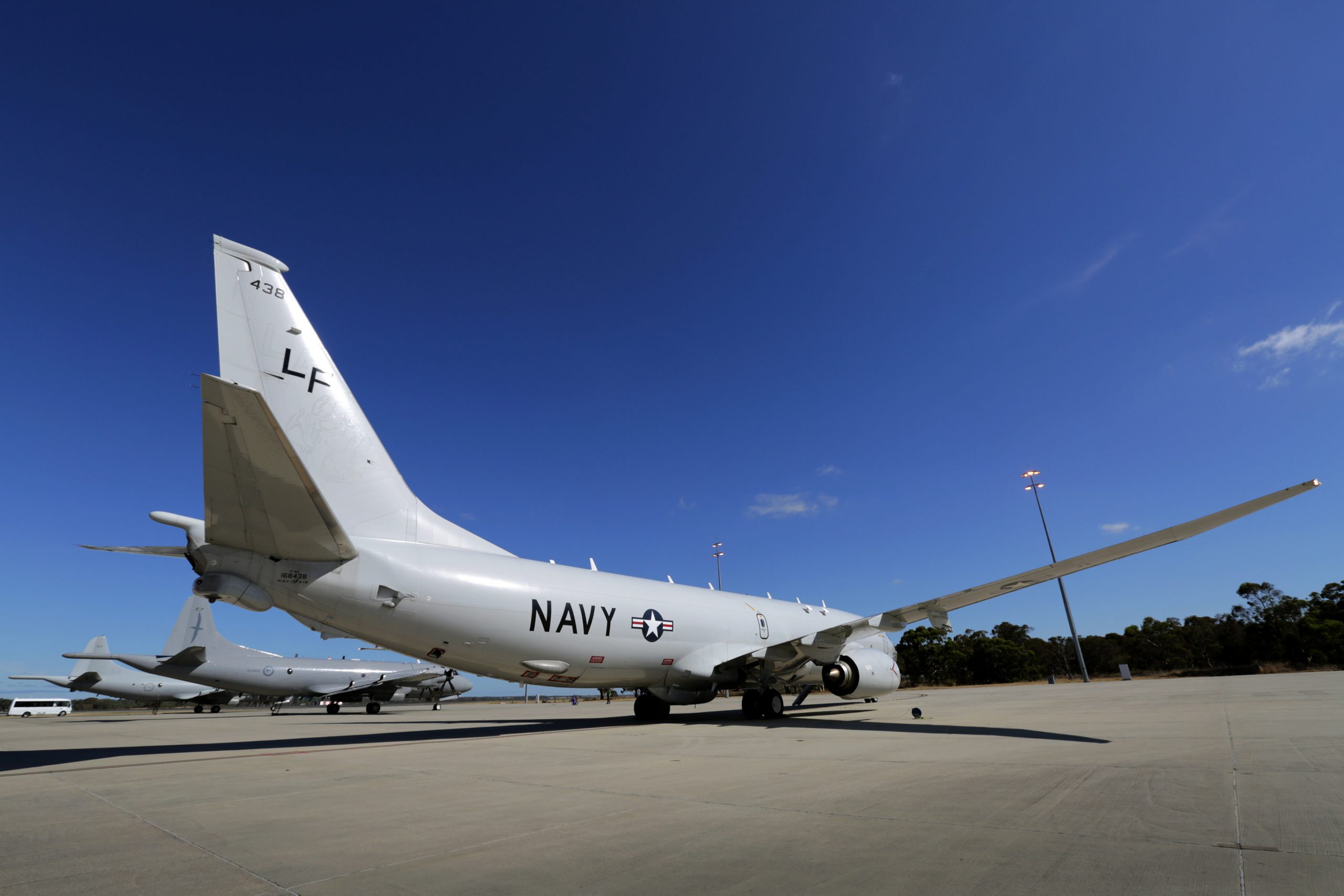
New Zealand’s possible acquisition of the P-8A Poseidon is a step closer after the US Department of State approved the sale of up to four of the maritime surveillance aircraft.
“The State Department has made a determination approving a possible Foreign Military Sale to New Zealand for P-8A aircraft and associated support,” a Defense Security Cooperation Agency (DSCA) notification stated on April 28. “The estimated cost is [US]$1.46 billion.”
As well as the aircraft and their systems, the DSCA says the acquisition would also comprise: “support equipment; operation support systems; maintenance trainer/classrooms; publications; software, engineering, and logistics technical assistance; foreign liaison officer support, contractor engineering technical services; repair and return; transportation; aircraft ferry; and other associated training, support equipment and services.”
New Zealand has a requirement to replace the Royal New Zealand Air Force’s six upgraded P-3K2 Orions by mid-2025 under the Future Air Surveillance Capability project.
A NZDF spokesperson told Radio New Zealand that the US approval of the P-8A acquisition was non-binding, that the likely cost would be less than the estimated US$1.46bn (NZ$2.13bn), and that the offer would be considered over coming months.
Other known contenders for the P-3K2 replacement requirement include the Airbus DS C295 MPA, a maritime surveillance development of Embraer’s E2 regional jet, and Japan’s Kawasaki P-1.
New Zealand has also been considering unmanned aircraft to augment the P-3K2 replacement in the maritime surveillance role, with likely options including the General Atomics Guardian (a variant of the Predator B) and the Northrop Grumman MQ-4C Triton. Australia is acquiring 15 P-8As, suggesting opportunities for trans- Tasman cooperation in training and maintenance support for the aircraft.
Norfolk Island Airlines to begin flying from June
Residents of Norfolk Island look set to regain their air links to New Zealand from June, when privately-held Norfolk Island Airlines plans to start flights to Auckland using a leased Boeing 737-300 from Nauru Airlines.
The island lost the only nonstop flight to New Zealand from May 21, when Air New Zealand stops flying from Auckland to the Australian territory located about 900nm east of Sydney in the Pacific Ocean.
However, flights will be restored from June 17, when Norfolk Island Airlines plans to start a once weekly service operating via an Auckland- Norfolk Island-Brisbane and return routing on Saturdays.
The airline’s founder Gregg Prechelt said New Zealand represented about 20 per cent of the Norfolk Island economy, so having nonstop air services was crucial for not just passenger traffic but also freight.
He was also hoping to arrest a decline in tourist numbers to the island, which has fallen from 40,000 to 26,000 in recent years.
“Norfolk Island is a strong package holiday destination,” Prechelt told Australian Aviation in an interview.
“Probably 80 per cent of the passenger numbers travelling to the island are holiday traffic. “We believe we can regrow the market and give a resurgence to the economy.”
Under a charter agreement, Nauru Airlines will supply the pilots and cabin crew and manage all the ground handling, as well as aviation and regulatory services.
Further, the flights will carry the Nauru Airlines ON code and operate under the airline’s air operator’s certificate (AOC).
“We are in essence a marketing carrier,” Prechelt said. “You can’t get a designator without an AOC.”
Ticket sales commenced on April 13. Norfolk Island Airlines previously operated some freighter services between the island and Australia, again with leased Nauru Airlines 737s.
In December 2016, Air New Zealand cited declining passenger demand was behind its decision to drop the nonstop flights from Auckland.
The Star Alliance member is maintaining flights to Norfolk Island from Brisbane (once weekly) and Sydney (twice weekly) operated by Airbus A320 equipment. The airline is paid a subsidy by Australia’s Department of Infrastructure and Regional Development to operate those services.
“The Auckland-Norfolk Island route is not commercially sustainable so it makes sense to focus our operations out of Australia, where there’s good potential,” Air New Zealand general manager for networks Richard Thomson said in December.
In January 2016, the federal government said Air New Zealand had been selected as the preferred provider of air services to Norfolk Island from the Australian mainland following the latest tender process.
Prechelt, a Norfolk Island local who splits his time between there and Brisbane, said he would monitor Air New Zealand’s pricing on Brisbane-Norfolk Island to ensure the subsidy was not used to push the newcomer off the route.
“Because we have a relationship with Nauru Airlines and we have a strong relationship with the package wholesalers in the industry here in Queensland we can compete effectively with Air New Zealand on the Brisbane to Norfolk run without the subsidy,” he said.
“But we will be watching the subsidy very closely to make sure that the subsidy doesn’t in effect subsidise anti-competitive behaviour in fares.
“We acknowledge that Air New Zealand is an extremely professional organisation but it is an underlying concern that it will be easier for them to reduce fares or maintain discount fares for longer than they have in the past because the government will always pay them.”
Further, he hoped Norfolk Island Airlines’ arrival on the Brisbane route would encourage the Australian Government to end the subsidy scheme when the current contract expires to save taxpayers’ money.
“The Commonwealth has said that the reason they are spending the taxpayers’ money is that no-one will fly there,” Prechelt said.
“Because we are in the market – and we are quite happy to do the Sydney route as well without the subsidy – it will be difficult for the Commonwealth to turn around and say it wants to continue a contract when someone is flying there.
“We’ve said to the Australian Government for many years that we can do the service without the necessity for a subsidy but they have had a preference to use Air New Zealand.”
Prechelt said the Nauru Airlines 737-300 would be configured to carry 113 passengers across business, premium (extra legroom economy seats with the middle seat free) and economy. All fares include at least one checked bag.
He said the 737-300 was the ideal aircraft for the route, given its had fewer seats than Air New Zealand’s 168-seat A320s.
“The only reason Air New Zealand pulled out of the Norfolk Island market from New Zealand was the aeroplane is too big,” Prechelt said.
“The size of the Norfolk Island market supports the 737 operation very profitably.”
Should growth expectations be met, Prechelt said a second weekly flight on Tuesdays for the peak season starting either at the end of September or at the end of March 2018 was on the cards.
US approves sale of anti-radiation missiles for RAAF Growler

Australia looks to be progressing the acquisition of warstocks of anti-radiation missiles for the RAAF’s 12 EA-18G Growler electronic attack aircraft after the US Department of State approved a US$137.6 million sale of HARM and AARGM missiles.
The Defense Security Cooperation Agency stated on April 28 that Australia has requested the possible sale under the Foreign Military Sales (FMS) program of up to 70 AGM‑88B High-Speed Anti‑Radiation Missile (HARM) and up to 40 AGM-88E Advanced Anti-Radiation Guided Missile (AARGM) missiles.
In addition the DSCA notice lists the possible acquisition of “up to 16 CATM-88B HARM Captive Air Training Missiles (CATM); up to 16 CATM‑88E AARGM CATM; up to 25 AGM‑88B control sections; up to 25 AGM‑88B guidance sections; up to 20 AGM-88E control sections; up to 20 AGM‑88E guidance sections; up to 48 telemetry/flight termination systems; US Government and contractor engineering, technical and logistics support services; and other associated support equipment and services.”
The prime contractors are Orbital ATK and Raytheon, the DSCA notice observes.
This would be Australia’s second acquisition of HARM and AARGM missiles after an initial buy of training stocks was first announced in June 2015.
Australia is acquiring 12 Boeing EA-18G Growlers, the first of which arrived in-country in late February.
By the middle of this year all 12 aircraft are expected to have arrived at RAAF Base Amberley in Queensland to be operated by 6 Squadron.
Want to see more stories from trusted news sources?
Make Australian Aviation a preferred news source on Google.
Click here to add Australian Aviation as a preferred news source.



