
 iscover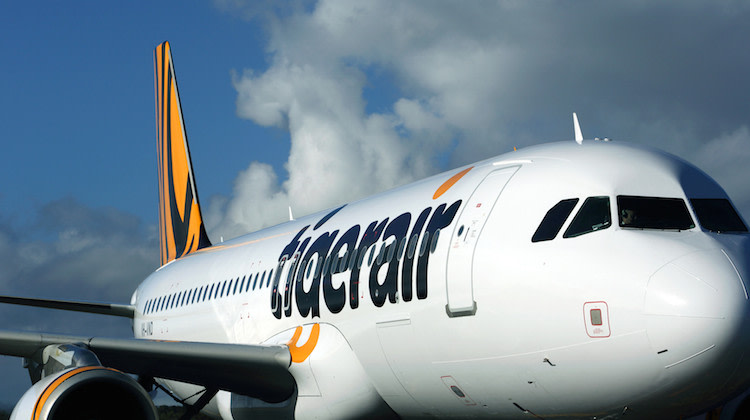
Tigerair Australia’s growth in passengers numbers has managed to keep pace with its capacity increases during the second quarter of 2014/15.
Preliminary traffic statistics published by parent Virgin Australia on Friday showed Tigerair lifted capacity, measured by available seat kilometres (ASK), by 21.7 per cent in the three months to December 31 2014, compared with the prior corresponding period.
This content is available exclusively to Australian Aviation members.
A monthly membership is only $5.99 or save with our annual plans.
- Australian Aviation quarterly print & digital magazines
- Access to In Focus reports every month on our website
- Unlimited access to all Australian Aviation digital content
- Access to the Australian Aviation app
- Australian Aviation quarterly print & digital magazines
- Access to In Focus reports every month on our website
- Access to our Behind the Lens photo galleries and other exclusive content
- Daily news updates via our email bulletin
- Unlimited access to all Australian Aviation digital content
- Access to the Australian Aviation app
- Australian Aviation quarterly print & digital magazines
- Access to In Focus reports every month on our website
- Access to our Behind the Lens photo galleries and other exclusive content
- Daily news updates via our email bulletin
At the same time, revenue passenger kilometres (RPK) rose by roughly the same amount at 21.9 per cent.
As a result, load factors rose 0.2 percentage points in the second quarter of 2014/15 to 86.5 per cent.
While load factors of above 80 per cent are comparable with other low-cost carriers, the second quarter operating statistics offered no indication on the airline’s yield, or average airfares per passenger.
Tigerair operates 13 Airbus A320 aircraft to 17 domestic destinations in Australia from its Melbourne Tullamarine, Brisbane and Sydney airport bases.
Virgin said Tigerair achieved an underlying profit before tax of $500,000 in the second quarter of 2014/15, a big turnaround from the $15.5 million underlying loss in the same quarter a year earlier.
“This result was driven by both improved unit revenues and greater cost efficiencies and represents the first quarterly profit for the airline since December 2010,” Virgin said.

Virgin chief executive John Borghetti said in November 2014 that Tigerair was forecast to reach breakeven by the end of the 2016 financial year.
Tigerair was the smallest of Australia’s four mainline domestic players with a capacity share of about six per cent, well behind low-cost rival Jetstar at 21 per cent. Qantas was the largest operator with a capacity share of roughly 42 per cent, with Virgin the second-largest next at 31 per cent.
Meanwhile, Virgin only marginally increased its domestic capacity in the second quarter, with ASKs up 1.4 per cent and available seats up 1.3 per cent.
However, growth in RPKs and total domestic passengers carried failed to match the lift in capacity, which resulted in load factors falling 0.4 percentage points to 78.1 per cent.
Want to see more stories from trusted news sources?
Make Australian Aviation a preferred news source on Google.
Click here to add Australian Aviation as a preferred news source.