
 iscover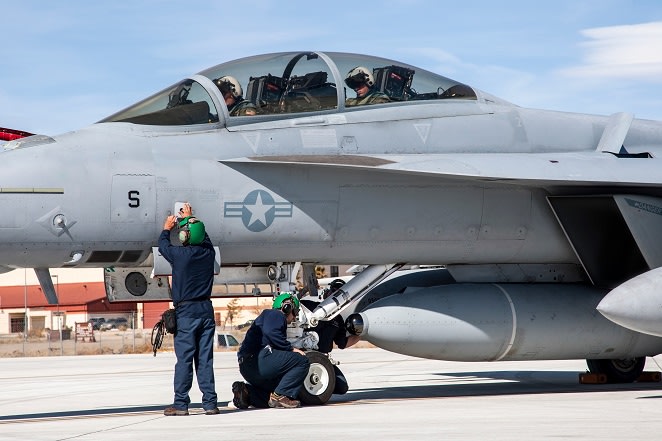
A new infra-red search and track (IRST) system for the F/A-18E/F Super Hornet has commenced flight trials in the US.
The system, designed by Lockheed Martin and developed from the IRST used on the F-14D Tomcat, has been adapted to fit in the front half of a Super Hornet centreline auxiliary fuel tank. The sensor allows the Super Hornet to passively see and track airborne targets by their heat signature which can be generated by areas such as an engine exhaust, air friction from a wing leading edge or weapons pylon, or even a sunlight reflection from a canopy.
This content is available exclusively to Australian Aviation members.
A monthly membership is only $5.99 or save with our annual plans.
- Australian Aviation quarterly print & digital magazines
- Access to In Focus reports every month on our website
- Unlimited access to all Australian Aviation digital content
- Access to the Australian Aviation app
- Australian Aviation quarterly print & digital magazines
- Access to In Focus reports every month on our website
- Access to our Behind the Lens photo galleries and other exclusive content
- Daily news updates via our email bulletin
- Unlimited access to all Australian Aviation digital content
- Access to the Australian Aviation app
- Australian Aviation quarterly print & digital magazines
- Access to In Focus reports every month on our website
- Access to our Behind the Lens photo galleries and other exclusive content
- Daily news updates via our email bulletin
“We continually evolve the aircraft to outpace future adversaries,” Tim Adrian, IRST F/A-18 program manager said in a statement. “When radar isn’t an option, this upgrade allows operators to locate targets and deploy the best weapon for the mission.”
The system is part of the US Navy’s ‘Flightplan’ spiral upgrade program for the Block II F/A-18E/F Super Hornet, and is scheduled to enter service in 2017. There has been no official interest in the IRST from the RAAF for its Super Hornets, although RAAF officials have previously said they would adopt the US Navy’s Flightplan development path in order to keep Australia’s fleet as common as possible to that of the US.
Want to see more stories from trusted news sources?
Make Australian Aviation a preferred news source on Google.
Click here to add Australian Aviation as a preferred news source.







Tim Cheney
says:Why haven’t they also added a TCS type system to see the target at BVR range???
Joseph O'Neill
says:“future adversaries”? Current potential adversaries have had inbuilt IRST for more than 20 years. This system may be great but it sterilises a pylon and increases the RCS every time it’s used. If you jettison it, bye bye expensive IRST system.
Raymond
says:Yes, why wasn’t an IRST system retrofitted in front of the cockpit like most other fighters?
australianaviation.com.au
says:Probably because the upper nose is already packed with the gun and an interrogator/transponder. This is an add on capability, whereas Boeing is proposing a built-in IRST for its Advanced Super Hornet proposal.
Cheers
Andrew