
 iscover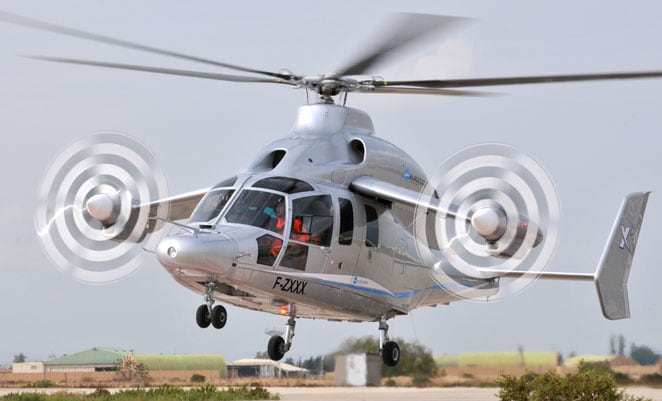
Eurocopter commenced flight tests of its X3 (pronounced, ‘X-cubed’) hybrid helicopter demonstrator on September 6 at the Istres test facility in southern France.
In order to keep development costs down, the X3 is a blend of the AS365 N3 Dauphin fuselage, EC155 main rotor, EC175 gearbox, NH 90 engines, and features the twin fin tail from the EC145 but without the tail rotor. It also features two forward facing five-bladed props mounted on stub wing sponsons on the upper fuselage which are driven by shafts from the main gearbox.
This content is available exclusively to Australian Aviation members.
A monthly membership is only $5.99 or save with our annual plans.
- Australian Aviation quarterly print & digital magazines
- Access to In Focus reports every month on our website
- Unlimited access to all Australian Aviation digital content
- Access to the Australian Aviation app
- Australian Aviation quarterly print & digital magazines
- Access to In Focus reports every month on our website
- Access to our Behind the Lens photo galleries and other exclusive content
- Daily news updates via our email bulletin
- Unlimited access to all Australian Aviation digital content
- Access to the Australian Aviation app
- Australian Aviation quarterly print & digital magazines
- Access to In Focus reports every month on our website
- Access to our Behind the Lens photo galleries and other exclusive content
- Daily news updates via our email bulletin
The X3 can change the speed of its main rotor in flight, avoiding drag divergence on the advancing blade and increasing the stall speed of the retreating blade, while also reducing noise. The small stub wings unload the main rotor at speed, thus allowing for the reduced main rotor rpm.
“Innovation is at the core of Eurocopter’s strategy to continue its leadership in the global helicopter sector, and the X3 demonstrator represents a key element of our innovation roadmap,” Lutz Bertling, Eurocopter’s President & CEO said in a statement. “The teams at Eurocopter took this hybrid helicopter from concept to first flight in less than three years, which demonstrates their skills, capabilities and dedication to defining the future of rotary-wing aircraft.”
Initial testing of the X3 will continue until December where the flight envelope will be gradually expanded to speeds of 180kts. In 2011, the aircraft will attempt to achieve sustained speeds on 220kts.
Want to see more stories from trusted news sources?
Make Australian Aviation a preferred news source on Google.
Click here to add Australian Aviation as a preferred news source.






