
 iscover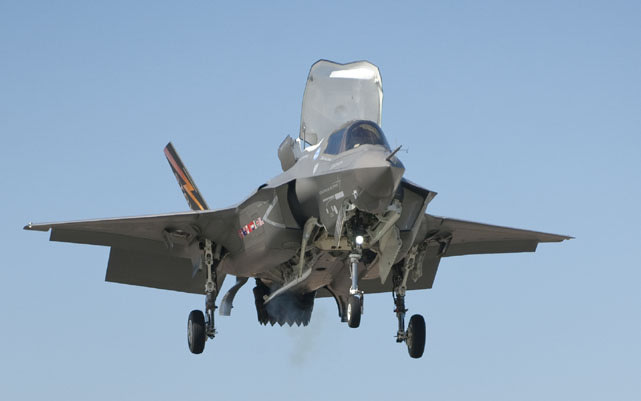
F-35B development aircraft BF-1 performed the JSF’s first vertical landing on March 18 at NAS Patuxent River near Washington.
Pilot Graham Tomlinson (a former RAF Harrier pilot) put the aircraft down on a Pax River ramp smoothly after slowing to a hover, as can be viewed here. The vertical landing came just one day after the aircraft’s first free hover about 150ft above the runway for about two minutes.
This content is available exclusively to Australian Aviation members.
A monthly membership is only $5.99 or save with our annual plans.
- Australian Aviation quarterly print & digital magazines
- Access to In Focus reports every month on our website
- Unlimited access to all Australian Aviation digital content
- Access to the Australian Aviation app
- Australian Aviation quarterly print & digital magazines
- Access to In Focus reports every month on our website
- Access to our Behind the Lens photo galleries and other exclusive content
- Daily news updates via our email bulletin
- Unlimited access to all Australian Aviation digital content
- Access to the Australian Aviation app
- Australian Aviation quarterly print & digital magazines
- Access to In Focus reports every month on our website
- Access to our Behind the Lens photo galleries and other exclusive content
- Daily news updates via our email bulletin
The milestone landing flight had begun with an 80kt very short takeoff, with the lightly loaded aircraft rotating just six to eight seconds after brake release. The vertical landing encountered little of the predicted ground effect tubulence that was expected, with Tomlinson telling media afterwards that he “felt very light cobblestones, far lower than in other (STOVL) aircraft. The loads, thermal, air data and control law guys were all smiling. Today’s vertical landing onto a 95ft square pad showed that we have the thrust and the control to manoeuvre accurately both in free air and in the descent through ground effect.”
“Having the F-35B perform its first vertical landing underscores the reality of the Marine Corps achieving its goal of an all STOVL force,” said Lt Gen George Trautman, the US Marine Corps’s deputy commandant for aviation. “Being able to operate and land virtually anywhere, the STOVL JSF is a unique fixed wing aircraft that can deploy, co-locate, train and fight with Marine ground forces while operating from a wider range of bases ashore and afloat than any other tacair platform.”
After the March 17 hover test, BF-1 made a slow landing at 60kt, and following a quick turnaround, performed a short takeoff in less than 1000ft of runway at 100kt.
The vertical landing milestone is a key test and proving point for the program, and comes between two years and 10 months later than previous schedules.
Want to see more stories from trusted news sources?
Make Australian Aviation a preferred news source on Google.
Click here to add Australian Aviation as a preferred news source.