
 iscover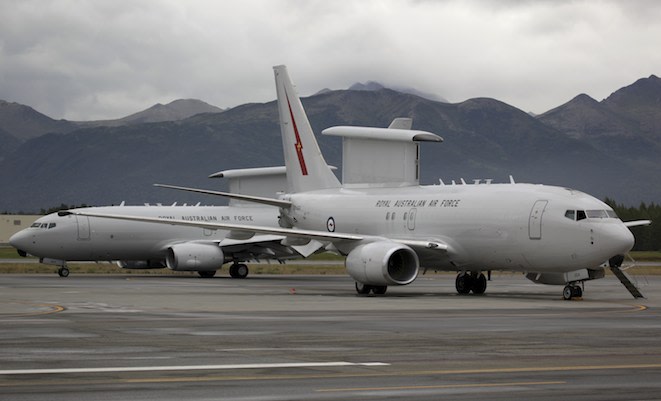
Two RAAF E-7A Wedgetail AEW&C aircraft have returned to Australia after participating in Exercise Red Flag Alaska last month.
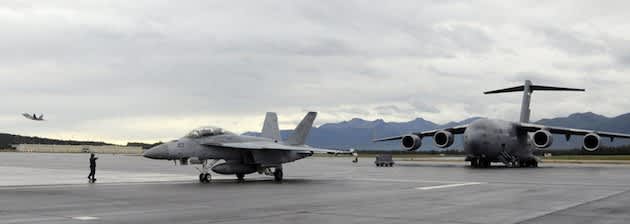
The two 2SQN aircraft, supported by 59 personnel from the RAAF’s 49 Wing, took part in a number of ‘large force employment’ air combat exercises involving up to 60 aircraft during Red Flag Alaska 14-3, which ran from August 7 to 22.
This content is available exclusively to Australian Aviation members.
A monthly membership is only $5.99 or save with our annual plans.
- Australian Aviation quarterly print & digital magazines
- Access to In Focus reports every month on our website
- Unlimited access to all Australian Aviation digital content
- Access to the Australian Aviation app
- Australian Aviation quarterly print & digital magazines
- Access to In Focus reports every month on our website
- Access to our Behind the Lens photo galleries and other exclusive content
- Daily news updates via our email bulletin
- Unlimited access to all Australian Aviation digital content
- Access to the Australian Aviation app
- Australian Aviation quarterly print & digital magazines
- Access to In Focus reports every month on our website
- Access to our Behind the Lens photo galleries and other exclusive content
- Daily news updates via our email bulletin
“This exercise was important as we move towards declaring final operational capability,” said Officer Commanding 42WG, GPCAPT Antony Martin.
“Red Flag also provided excellent opportunities for our personnel to integrate with a joint task force to learn how other countries operate.”
Red Flag Alaska is hosted by the US Pacific Air Forces and utilises the 168,350 sq km (65,000 sq mile) Joint Pacific Alaska Range Complex, with aircraft operating from Eielson Air Force Base and Joint Base Elmendorf-Richardson.
“The Joint Pacific-Alaska Range Complex airspace allows aircraft to practice tasks that cannot be accomplished in other areas,” said Air Force Lt Col Dylan Baumgartner, commander of the 353rd Combat Training Squadron, Detachment 1, explained in a statement. “The large volume of sky and lack of population throughout most of the range space allows for full use of aircraft capabilities, such as extended supersonic flight, which isn’t available in most training areas.”
Want to see more stories from trusted news sources?
Make Australian Aviation a preferred news source on Google.
Click here to add Australian Aviation as a preferred news source.






