
 iscover
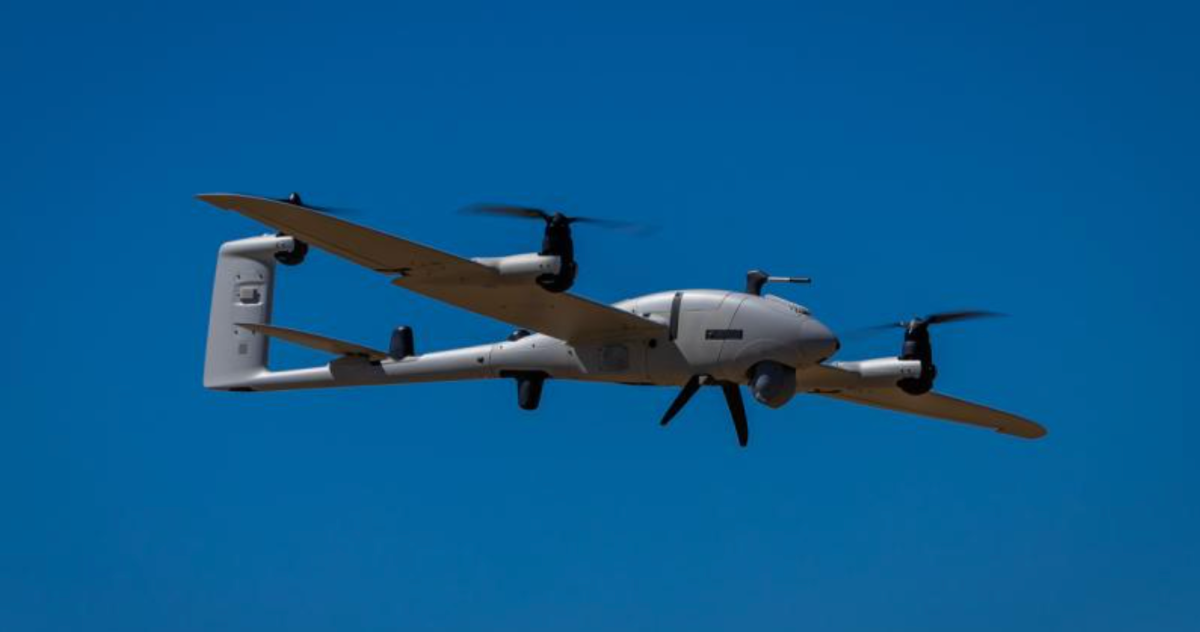
New Quantum Systems Vector AI uncrewed aerial systems (Image: Private Sera Mar, Defence)
Opinion: Australia is being left badly under-equipped for the drone era
 0 comment


The government’s headline $7 billion counter-drone plan is largely smoke and mirrors, spreading funds over a decade into legacy systems while leaving Australia underprepared for high-volume drone warfare.
We’re meant to be celebrating the Albanese government’s amazing new plan to adapt the Australian military to the drone era, with Minister Pat Conroy telling us about an apparent $7 billion investment in counter-drone systems.
But before we pop the champagne corks, it’s worth looking behind the hoopla. Like the “Great and Powerful” Wizard of Oz, who turns out to be a small but jovial carnival showman from Kansas, the truth is something much more mundane hiding behind the government’s curtain of hype.
This content is available exclusively to Australian Aviation members.
A monthly membership is only $5.99 or save with our annual plans.
- Australian Aviation quarterly print & digital magazines
- Access to In Focus reports every month on our website
- Unlimited access to all Australian Aviation digital content
- Access to the Australian Aviation app
- Australian Aviation quarterly print & digital magazines
- Access to In Focus reports every month on our website
- Access to our Behind the Lens photo galleries and other exclusive content
- Daily news updates via our email bulletin
Minister Conroy’s flashy number is window dressing. The practical reality is that the government’s plans leave our military exposed and under-equipped in a critical area for the next 10 years, maybe longer.
The $7 billion sounds great. So, the natural reaction is that a lot must be happening, but it’s not.
For a start, the $7 billion figure is spread out – peanut buttered – between now and 2036. And it’s being spent mainly on a grab bag of pretty traditional but very expensive stuff like conventional naval missiles, an existing missile defence system, and improvements to aircraft like the Air Force’s F-35 and Super Hornet jet fighters. The government has a list of these plans buried deep in its revised Defence investment plan released last week (page 74 of the new investment plan).
Those traditional – and mainly existing – things our military has will soak up billions of dollars in Minister Conroy’s press release, leaving a trickle for creative Australian companies. This also means that only a trickle of the $7 billion, let alone the total Defence budget, is going to equipping our military with the new essential tools of war – cheap drone and counter-drone systems available to our military in large numbers when they need them. Our military is failing to adapt at any scale or speed that matters.
The actual amounts going to innovative Australian companies like SYPAQ and AIM Defence aren’t in the same universe as the billions Minister Conroy trumpets. They are being drip-fed $10 million and $21 million contracts to develop a small fast drone interceptor that can intercept systems like Iran’s Shahad kamikaze drone, and to develop a laser that can shoot down smaller quadcopter-type drones.
Good. This will hopefully allow these two creative local companies to develop effective systems that our military might actually operate in the future. But these contracts are not going to actually equip formations across our military in any way or at any scale that matters. The companies know the contracts are tiny, but they have to smile for the cameras to not upset their government customer.
This is the situation after our government ministers and defence officials have witnessed four years of intense drone war and technological development in Ukraine, and now more recently in the Persian Gulf.
To put things into perspective, while Minister Conroy is celebrating our military paying to develop two types of capable small counter-drone systems for a total of $31 million, Defence is spending $3.9 billion just this year on the AUKUS subs program and plans to spend between $71–96 billion on the AUKUS program over the next 10 years.
Yes – $3.9 billion out the door this year alone on the AUKUS subs, contrasted with $31 million on counter-drone contracts.
So, more than 125 times the cash going to SYPAQ and AIM-Defence is going out the door this year on subs we don’t even start to get until sometime next decade.
It’s obvious who should be celebrating, and it’s easy to see where the government’s real priority is. Unfortunately, that’s not Australian-made counter-drone systems or even adapting our military to the new era of cheap, high-volume drone warfare. Real contracts valued at $1 billion with a diverse set of Australian companies – including SYPAQ and AIM Defence – making small, high-volume drones and counter-drone systems would start to show that change is happening.
The Ukraine war and Iran war both show that large numbers of small systems are essential – thousands is the minimum. The Ukrainians are on track to produce some 4.5 million small drone and counter-drone systems this year – and use them in the war.
Defence just isn’t doing anything remotely like this Ukrainian approach to set the foundations for our military to have anything like this flow of cheap essential weapons should a conflict happen in our region.
The Ukrainians have built a drone empire while Australia has sat on its hands and watched, but not learned. Meanwhile, the government tells us our part of the world is more dangerous than it was just two years ago.
Even the money the government plans to spend on actual drones – rather than on countermeasures to defeat them – over the next 10 years comes with a catch. The bulk of this money is going towards a small number of large drones – like the Ghost Bat uncrewed aircraft and the large Ghost Shark unmanned submarine, each of which costs in the tens of millions of dollars per drone.
Then there’s the even more expensive complex surveillance drone Defence also celebrates – the Triton made by Northrop Grumman. Australia is paying over $3 billion to get just four of these long-distance drones.
The problem is obvious: Defence is doing with drones what it loves to do with its manned systems like warships, submarines and tanks: buying complex, very expensive items that are just too expensive to buy many of. In the drone era, it’s stuck thinking 50 of something is a lot.
This leaves Australia equipping its military with tens of expensive large drones and a small amount of cheap counter-drone systems. Meanwhile, the rest of the world is adapting fast and knows that effective militaries now need thousands – even millions – of small, cheap, disposable drone and counter-drone systems.
Less over-hyped celebrations and more achievements are what Australians want from the government when it is spending our money on our security.
Want to see more stories from trusted news sources?
Make Australian Aviation a preferred news source on Google.
Click here to add Australian Aviation as a preferred news source.




