 iscover
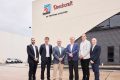
Australia’s first dedicated sustainable aviation fuel blending terminal has opened at Toowoomba Wellcamp Airport.
The facility, announced last year, is operated by Wagner Sustainable Fuels in partnership with Boeing and FlyORO, and is the first SAF blending terminal in the world to be co-located with an airport. It will allow “neat” SAF to be mixed with conventional jet fuel, reducing emissions.
This content is available exclusively to Australian Aviation members.
A monthly membership is only $5.99 or save with our annual plans.
- Australian Aviation quarterly print & digital magazines
- Access to In Focus reports every month on our website
- Unlimited access to all Australian Aviation digital content
- Access to the Australian Aviation app
- Australian Aviation quarterly print & digital magazines
- Access to In Focus reports every month on our website
- Access to our Behind the Lens photo galleries and other exclusive content
- Daily news updates via our email bulletin
- Unlimited access to all Australian Aviation digital content
- Access to the Australian Aviation app
- Australian Aviation quarterly print & digital magazines
- Access to In Focus reports every month on our website
- Access to our Behind the Lens photo galleries and other exclusive content
- Daily news updates via our email bulletin
“This is a defining moment for sustainable aviation in Australia and underscores Wagner Sustainable Fuels’ commitment to provide solutions today for the challenges of tomorrow,” said Matt Doyle, chief executive of Wagner Sustainable Fuels.
“The launch of our Toowoomba Terminal is the start of our plans to deliver decarbonisation benefits and meet the aviation sector’s growing demand through flexible, efficient, and scalable SAF blending.
“With the support from Boeing, we’re focused on bringing large scale SAF and renewable diesel production to Australia and integrating it into the global supply chain through the Brisbane Recycling and SAF Facility, which is currently under planning and development.”
According to Dr Kimberly Camrass, Boeing’s head of Asia Pacific Sustainability, the new plant is a step towards fulfilling the 2023 Boeing/CSIRO SAF Roadmap, which identified Australia as being in a “prime position” to develop a domestic SAF industry and predicted a 75 per cent increase in jet fuel demand in Australia by 2050.
“Current global regulations permit commercial aircraft to use up to a 50/50 blend of SAF and fossil jet fuel. This will continue to rise as additional production pathways are certified,” she said.
“Wagner’s commercial blending terminal is a powerful step forward in aviation decarbonisation, boosting regional employment and opening new export markets.

“It will also provide important learnings to support the development of robust and scalable SAF supply chains within Australia.”
The news comes as Wagner is also partnering with Boeing to build what it says is Australia’s first fully integrated SAF production facility in Brisbane.
The project last year secured $760,000 in Queensland government funding and aims to start construction in 2026. It will use LanzaJet’s alcohol-to-jet (ATJ) technology to create ethanol-based fuel, with the expectation of 102 million litres of SAF per year.
Wagner says the SAF produced at its Brisbane facility will “integrate seamlessly with existing airline infrastructure and meet rigorous fuel standards”.
Qantas, which is working with Boeing rival Airbus on the “Project Ulysses” SAF plant in northern Queensland, has previously called for a SAF blending mandate similar to those in jurisdictions such as the UK, the US, Europe, and Japan.
Want to see more stories from trusted news sources?
Make Australian Aviation a preferred news source on Google.
Click here to add Australian Aviation as a preferred news source.