
 iscover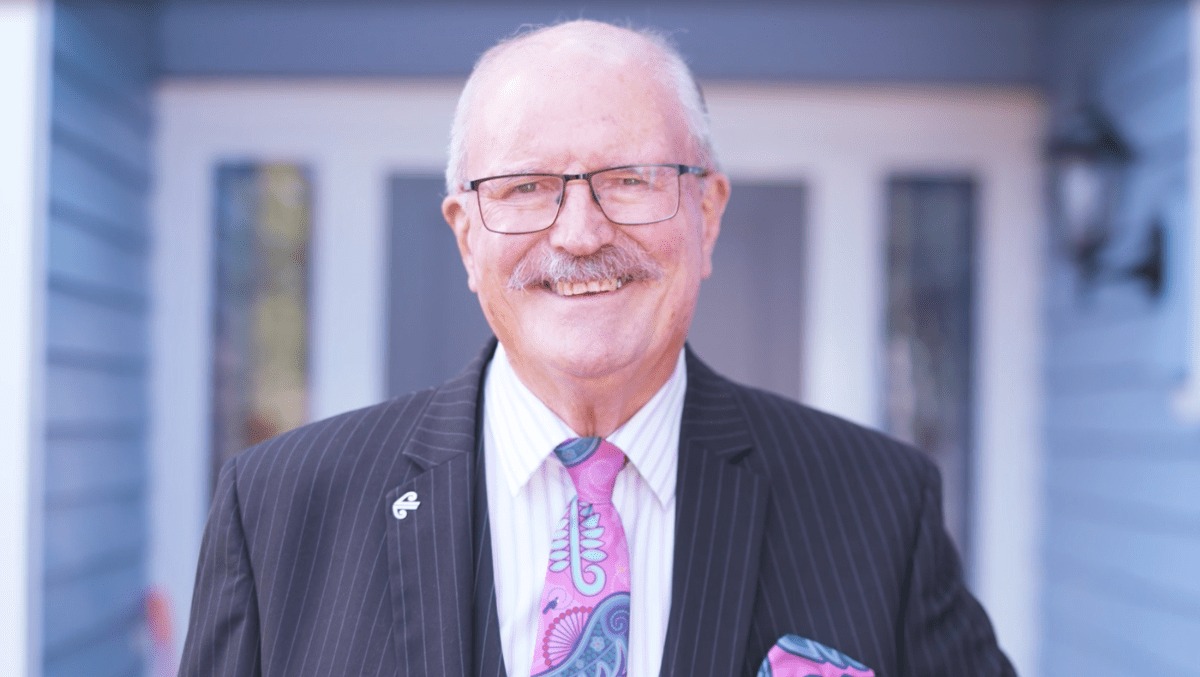
Air New Zealand’s Ron Twine, 74, has just hung up his wings after 53 years at the Kiwi national carrier, making him the longest-serving flight attendant in the airline’s history.
Following his final flight from Vancouver to Auckland, he joined Jake Nelson on the Australian Aviation podcast to discuss his long career, how things changed at Air New Zealand over half a century, and what to consider if you’re pondering a job as cabin crew.
This content is available exclusively to Australian Aviation members.
A monthly membership is only $5.99 or save with our annual plans.
- Australian Aviation quarterly print & digital magazines
- Access to In Focus reports every month on our website
- Unlimited access to all Australian Aviation digital content
- Access to the Australian Aviation app
- Australian Aviation quarterly print & digital magazines
- Access to In Focus reports every month on our website
- Access to our Behind the Lens photo galleries and other exclusive content
- Daily news updates via our email bulletin
- Unlimited access to all Australian Aviation digital content
- Access to the Australian Aviation app
- Australian Aviation quarterly print & digital magazines
- Access to In Focus reports every month on our website
- Access to our Behind the Lens photo galleries and other exclusive content
- Daily news updates via our email bulletin
Listen to the podcast above, or read the episode transcript below.
Transcript
Jake Nelson
Hello, I’m Jake Nelson. Welcome to the Australian Aviation podcast. Now this week, we have a true veteran of the skies, Ron Twine, Air New Zealand’s longest-serving flight attendant who has just retired after 53 years with the Kiwi carrier. Now, Ron joined in 1970 at the age of just 21 and has never looked back. Over the course of half a century, he has met lifelong friends, served more celebrities than most of us will meet in our lives, and even found true love, and he joins us now. Kia ora, Ron, welcome to the show.
Ron Twine
Hi, and thank you very much for having me on. Really appreciate it.
JN
So take us back, first of all, to where it all started. How did you start working for Air New Zealand?
RT
Well, it goes back to the late 1960s. I was working in a hotel on Mo’orea, a little island just off Tahiti. And one day, this yacht came across, people came off the yacht, came to a little French hotel I was working at. After a wee chat, I discovered they were an Air New Zealand crew with a stopover in Tahiti. I thought, by golly, that sounds incredible. So over the course of the day, I got chatting with all of them and found out what they did and where they went. I thought that sounds like the life for me!
At the end of the day, the captain, who was a really nice chap, actually wrote me a letter of introduction to Air New Zealand. So when I eventually made it back to New Zealand shores, I went down to the office in Auckland and saw the fellow who was in charge of cabin services back then and had an interview, which I thought didn’t go too bad.
So the next day, I bought a ticket and went to Australia. Mum phoned me and said, they want you back for another interview tomorrow, you’re coming home. I thought, Oh, yes, I really want to do this. I came home and had the interview. Here we are 53 years later.
JN
What was it about this conversation in Tahiti with all these New Zealand crews that really sold you on the idea of becoming a flight attendant?
RT
I think it was the lifestyle. And honestly, it is a lifestyle rather than a job as such as you can well imagine. It’s something that I have been doing in the hotel industry since I left school. People are my passion. When they were telling me about some of the people they’d carried and, you know, everybody they meet, and they said, “Of course, every time we go to work, we’re flying with somebody different”.
I thought, well, that beats going into an office job every day and being with the same people every day. I thought it has to be a good one. After my dad was in the Royal New Zealand Navy, I had [inaudible] right from the word go. So this is absolutely a perfect fit for me.
JN
And what do you love most about your job?
RT
The people. Absolutely the people. As I say, every time you get to work, you’re with a different crew, every time you get to work, you have a different bunch of passengers you’re looking after. The last 53 years, I’ve made so many incredibly good friends, both crew and with our passengers. And our passengers. We’ve had people eventually come to our wedding, passengers that we would meet on, and we got away with on holiday. It’s just amazing that people that you meet and the most unlikely sort of people as well, people that you just meet, and you would think, who are these people, then all of a sudden, they just come out of the woodwork.
They’re the most amazing people you could ever imagine. Real people. Yes, it’s an attraction thing. I guess this job has given me the strength to be the person I am, plus the fact that you put on your uniform. And you’re on stage. I guess you can understand that when you’re on board. It’s my environment. I’m on stage, and I love it.
JN
So 53 years, as you said, that’s, you know, that’s not just a job or a career. It is a way of life. What made you stay in New Zealand at this one airline for five decades?
RT
Well, to be honest, I’ve never really thought of going anywhere else. Over the 53 years, we’ve had 11 different CEOs of the company. They’ve all been totally different. Some of them I’ve really clicked with, and others I’ve barely met, strangely enough, because they tend to fly quite a bit, obviously. But I think it’s the life friendships you make. When I first joined the company back in 1970, we only had barely just over 100 or so international cabin crew.
So everybody knew everybody, and it was a real family thing. Of course, of course, that just grew bigger as time went on, and we went from the Electra aircraft to DC-8s to DC-10s to 747-200s to 767s and so on and so forth, right through to today where we’re flying on the Dreamliner, and the 777… all I can say is my family has just got bigger, which to me has been fantastic. I loved it.
JN
They must take good care of you over there as well.
RT
I have to say, over the years, we’ve had ups and downs. But in the main, it has just been one incredible ride, a journey that is not for everybody, obviously. I’ve got friends so I live here in Christchurch. So I’ve been commuting to Auckland. But I’ve got friends here who’ve told me there’s no way in the world they could do what I do, having to put up with some of the things we have to put up with and everything else. But that’s all part of the job. Yeah, if that’s what it boils down to, though it’s people, and at the end of the day, it’s what makes the whole world go around. I’ve loved it from the start.
It was a small section of the community that was able to fly. I mean, flying was expensive. Of course, of course, with the advent of the 747, it became widely available to everybody really, because the prices just dropped. So you just get a real cross-section of people these days.
JN
What are some of the highlights and memorable moments of your 53 years at Air New Zealand?
RT
Well, I guess the one that takes the cake, really, I mean, I play guitar and sing myself. One day leaving Los Angeles, we had George Harrison, the Beatle, onboard. And what an incredible gentleman – he and I spent about three hours during the evening, standing around the galley, drinking coffee and chatting. At one time, I was electrocuted on stage. So every day I’m here, it’s a good day. He admitted to me that yes he’d had a few tingles on stage, and so forth, and so on and so forth.
But he actually opened up a lot about his music and his family to me, and I was quite amazed that he would tell me about these things. But he was such a gentleman about everything. I just absolutely loved that flight. It was fantastic. I’ve had a few others like with Billy Joel, Cliff Richard, Joe Cocker, a lot of these people, and when you get them on board an aeroplane, they either become the person you think they are or better, or the opposite.
I must admit, the former is what I found with most people, they, they really are, they’re going out of their way to be friendly. They’re happy to give the crew autographs if you know if they ask for them. I mean, we’ve been told by the company you don’t ask for autographs, but more often than not, they offer, or the manager they’re travelling with will offer. With those autographs comes a handshake and a bit of a chat. It is fantastic. It really is.
JN
Now you mentioned that some people do become the opposite. Were there any celebs that were a bit more on the difficult side?
RT
Well, maybe not celebs, I’ve had a few politicians that have gone the other way. But as a general rule, I would say most of the celebs and the stars that I’ve carried have been amazing people. I think one of the funniest was Spike Milligan, and some people like that.
And it’s, they say the craziest things because they are who they are. As I say, when you get on board an aeroplane, it’s a confined environment. They tend to come out of their shell a little bit, as long as you’re a bit forthcoming as well. As I say, I’m a little bit of a gregarious person when I put the uniform on. So I’m prepared to talk to these people, and you get back what you give. I think this job to me has been so rewarding in so many ways. People say would you do it again? Absolutely. I would.
JN
What was your biggest horror story? Because, you know, over 53 years, you’ve got to have some downbeats. Was there a storm or a nightmare passenger, a long diversion?
RT
I don’t know what I can actually tell you about too many of those things at the moment, to be honest. But there was one flight I did, this is going back a number of years now. We have something happen on every leg, as in tire blowout. You know, I think we’re coming out of Singapore, and a passenger called me over and said, “Should that be happening?” And I look out the window. There’s fuel coming off the top of the wing, and I said, “No, I don’t think it should”.
I phoned up the flight deck, and one of the pilots came back and had a look. Then we went back to the terminal building. With the passengers on board, they fixed it. And away we came, we took off out of Singapore. I think we landed back in Sydney. That was the only sector where something didn’t happen. Then Sydney-Auckland, we landed and burst more tires on landing, screeched to a halt in the middle of the runway surrounded by fire engines.
You can just imagine the scenario. But then again, we’re trained for all of these possibilities. So the passengers always look to the crew in a situation like this. Or even on take-off or landing. If there’s any funny noises or anything like that. You look out to the cabin. The people are all staring at you because they think, “Right, if I’m going to look scared, then they’re going to be scared.” So you just, you know, you sit there with a smile on your face because you know that everything’s gonna be okay at the end of the day.
JN
Is there a lot of pressure on you in situations like that?
RT
Well, I don’t feel there’s pressure. As I say, we go through training a couple of times a year in safety, medical training, security training, on how to handle people. So no, it doesn’t really bother me at all. In fact, everybody said to me, don’t you ever get scared flying? If I ever did, I wouldn’t be doing the job I’m doing so, no.
JN
Now, on a happier note, you also met your wife while working for Air New Zealand. I think you were both working for Air New Zealand. Can you tell us that story?
RT
Yes. Well, Nikki had been working domestically for a number of years. And it was on her very first international flight, actually, that we met, arriving in Los Angeles, getting off the aircraft, getting our bags, and I looked down at her bag because, on the aeroplane, I hadn’t really seen that much of her, I was up the front and she was down the back.
Looking at her suitcase, she had one of those old yellow ones made of cardboard that had the expanding hinges and things, and I said, well, you’ll have to be prepared to take a bit of stick for that, as everybody else picked up their [inaudible] and their Samsonites.
She just looked at me and told me it was the only suitcase she had and one thing and another. Then she saw me pick up mine, which was exactly the same sort of suitcase. But it was held together with duct tape and Sellotape. It’d been around for a while. So we just looked at each other and laughed. It was a bit funny, really.
JN
With both of you being flight attendants, you must have sort of spent a lot of time apart. How have you dealt with that when you know you’re both on different routes in different opposite corners of the world?
RT
Well, we were quite lucky, in actual fact, because early on in the piece, Air New Zealand, their cabin crew had what they call spouse alert. And you could apply for you and your spouse or your significant other to work the same rosters. So originally, it was absolutely brilliant because we would go everywhere together, which was fine.
Then when we eventually got married, went away on honeymoon and came home pregnant. And my wife said, “Well, there’s no way I can go away for a week, 10 days at a time and leave our little girl behind.” So then I was still flying internationally.
After maternity leave, Nikki turned up with a friend one day who said that Mount Cook Airlines, which is a domestic airline here now under Air New Zealand’s umbrella, was looking to hire. So she phoned up, and basically, got the job over the phone. So then she was flying domestically, which worked fine because most nights, she was home.
We were lucky we had her parents living close by, and if I was away and Nikki had to work, then our daughter spent time with her grandparents, which is where she learned to cook and sew and swing a hammer. She is now an engineer with Air New Zealand.
JN
So very much a family business, then, I suppose you would have passed on your love of aviation.
RT
She definitely got that. Absolutely. She got that. I think by the time she was about 12 years old, she’d had something like two hundred and something flights. And it was really funny because the other day, we were chatting with her. She said that she was sorry, she hadn’t mentioned that before. She said she’d always just taken the lifestyle for granted. But she said she sees now with me finishing it off how much it meant to the whole family.
JN
So getting back to a point you made earlier, you mentioned all of the different aircraft that you’ve flown on, you know, going back to the DCS right through the 747s and now with the Dreamliners, what’s been your favourite aircraft to work on as cabin crew?
RT
Oh, 747-400, any day. It was a nice big aeroplane. The passengers had lots of space. The seats were bigger; the aisles were wider. I think it worked in our favour because the passengers were happy. Of course, of course, if the passengers are happy, it makes life a lot easier on board the aeroplane when you were doing your job.
The thing is, it is so large, very seldom would you get bothered by turbulence. If you did, it wasn’t severe. I don’t know, there was just something about the whole aeroplane, and sort of with the advent of the 747 aircraft people started to fly. I think they call her the Queen of the Skies. She definitely was.
I was very lucky that I managed to do the final commercial flight of our last 747 from San Fran to Auckland. That was a bit of a tearjerker, I just absolutely fell in love with that aeroplane and to be on her final mission, that was something else as well.
JN
How do more modern planes like the Dreamliner compare with Her Majesty?
RT
Well, one absolute positive I can tell you is that flying on the Dreamliner, I find I don’t have to hydrate myself anywhere near as much as I did on flying any other aircraft prior to that – all of the others being built of aluminium, basically, they could not hydrate the air inside the cabin because of corrosion problems.
So, in the 787 Dreamliner, being a composite, they can actually put hydration into the atmosphere inside the cabin so that you do not dry out anywhere near as much as you do on the other aircraft, even – we don’t fly the A380, but that is old technology as well, so you have the same problem with that.
JN
You’ve been with Air New Zealand for more than 50 years. What are some of the biggest changes that you’ve seen? We’ve spoken a bit about the aircraft before, but what else have you seen change over the years?
RT
Well, I think the biggest change, you know, besides the fact that I started flying internationally with propellers, is back then in 1970, people who flew, the gentlemen all came on in suits, ties, the women in hats and gloves, and all the kids in their Sunday best. And it was something special. Even us as cabin crew, for the men we had military-style uniforms, the same as the flight deck had.
So we got on board the aeroplane, and we had to take a suit carrier, obviously. We got on board, changed from our uniform jackets, and took the epaulettes off. Then we had a tuxedo, bow tie. And one of Air New Zealand’s big selling points was they called us the Ritz of the skies. I mean, the way we looked in uniform, and the girls were wearing the Dior uniform at the time, which was stunning. We definitely lived up to that moniker.
JN
How’s it been to go from that sort of Ritz to the skies to the more, I guess, not casual but, you know, less formal attitude that we see in flying today?
RT
Well, I think you can use the word casual, to be honest, it is just it is so different to see people even flying in front of the aeroplane, and they’ll come on in thongs, a pair of beach shorts and a singlet, and they’re sitting in business class with everybody else who’s dressed up. I look at them and I think, that’s a little bit disrespectful to other passengers, to be honest, there’s no way in the world I could ever fly like that, sitting in the front of an aeroplane. But I guess they pay their fare and so they wear what they want, to a degree.
I mean, I know Qantas for a fact don’t even let people into the lounges wearing thongs. Air New Zealand has not brought anything like that in, so these people are still allowed to use the lounges, and they come on board the same thing. But if it came to an emergency situation, thongs would not be good for heading down a slide or anything like that. That’s one thing that has really, really bugged me a little bit over the years.
But then again, like I say, with the advent of the 747 and everybody being able to fly, it brings you… all socio-economic groups are now able to take to the air and fly around the world, and they bring what they bring. A lot of them are happy, pretty happy to be flying anyway.
Since COVID, I think people are just happy to get on an aeroplane and go anywhere, to be honest. It’s quite noticeable, the different routes we take as to what people wear: if you’re going to a holiday destination like Brisbane, or you’re heading for the islands, Raro, Tahiti, Fiji or somewhere, then people are a lot less formal in what they wear.
The difference between that and say people going to Sydney or Melbourne, probably because of the type of passenger you get, more of the businessmen, that type of thing. But you also get a different type of apparel that they bring on board. I think it’s an age group thing as well. Because even when you’re flying to the islands, or a long haul through to LA, London or somewhere, I would say 50-plus, you are looking at slacks, shoes, and maybe a polo shirt or something like that for the guys. The women tend to get dressed up a little bit, whereas the younger people tend to be less formal, more casual.
JN
Was COVID tough for you? Because you know, I mean, I imagined it must have been possibly a positive for the family getting to spend a bit more time at home. But you know, having to take a break from what you love doing all because of the pandemic?
RT
Well, to be honest, I didn’t take a break, apart from the fact that from the very first lockdown here in New Zealand, the Prime Minister said well, if you’re over 70, you stay home. So I stayed home. But being the usual story, you know, last on, first off, I stayed on board, and once I had my conversion training from the 777 to the 787, then we flew around around the world all over the place.
Granted, everywhere we went, we were stuck in our hotel room and weren’t allowed out for two or three days at a time. That suited me down to the ground because I’m an avid reader, and I take a bag full of books. Some of the younger ones didn’t like it so much. But no, I didn’t have that sort of break from flying like most people did, basically because of my seniority.
During that time, there were probably maybe 200 of us who kept the aeroplanes in the air. A lot of our aircraft still kept flying internationally as freighters, and we would intersperse, so we still had like a flight a day to LA, but there might have only been two a week that had passengers. Some of the other destinations where we had fewer passengers, like Japan, for instance, the government said thou will not travel, so most of those were freighters; we did the occasional passenger run.
But even back then, on a 787 that carries 300 people, we were down to like maybe 10-30 people a sector. Then, as you will have seen at the end of the press, obviously, between here and Australia’s different ports on the East Coast, we had the bubbles that would open and close. So one day, you’d be taking people across the Tasman to Australia, but we weren’t allowed to bring them back. And vice versa.
So, to be honest, I’ve never watched so many movies, on sectors where we didn’t have any passengers. That was just really weird because since COVID has finished, every sector we fly, there’s barely a spare seat anywhere. People just want to get out there and fly. I must admit, it seems quite amazing to me because the prices now have soared, because we’ve got less frequency of aircraft, and I think that’s pretty universal for most airlines. So the prices are up there at the moment. Whether they come down or not will be something to be seen.
JN
You recently flew your last flight with Air New Zealand from Vancouver to Auckland. How did that go? What was going through your mind during that flight?
RT
It was quite weird, to be honest. Leaving Vancouver knowing I was putting my uniform on for the very last time. We had a really, really good crew, and they had organised a dinner out for all of the cabin crew and the flight deck, and we had a really good night out for dinner. The crew all appreciated the fact that it was my last sector. In actual fact, when we left Auckland on the way to Vancouver, there were only two people on the crew that I knew, out of 10. So I met a lot of new people on that particular sector.
We took off out of Auckland, and the captain made a PA, and he said, “Well, folks,” and gave the story about my 53 years and being on my last tour of duty. He said, “the first time I met Ron, I was the 28-year-old second officer on the 747, and he was in charge, and look at us now.” And he said, “but we’re still flying”. And coming back, we had a lady in charge up the front as the skipper. She made such a PA. I was almost in tears.
Then our inflight service manager, he made a PA, and every time, it just sort of hit home that this is my last sector. I still think it’s gonna take me a wee while to realise that I will no longer be getting a roster. I have just lived this career and relished 53 years of it. It’s been amazing. It’s been incredible. It’s been an incredible journey. The last sector home, we arrived in Auckland, and all of Air New Zealand’s senior management team were at the door… blew me away, absolutely blew me away.
Then our daughter, who’s, as I say, is a manager in our engineering section. She stepped around the corner of the door. I lost it. It was just amazing. Absolutely amazing. To be celebrated like I was by the company, especially the CEO, who was the first one there when the door opened. Unbelievable. Absolutely unbelievable. I’ve been totally humbled by all of this, I really have.
JN
What are you going to miss the most in your retirement?
RT
People. Absolutely people, not only the passengers but the crew that have become part of my family over the last 53 years. Obviously, a lot of them have left the airline now, they don’t fly anymore. I’ve kept in touch with a lot, a lot of them. But it’s the passengers. I just love chatting to passengers and finding out who they are, where they’re from and what they do and where they’re going and why. And you get so many different stories.
I will miss that, although, during COVID, I did actually join a seniors’ golf group. These guys are an incredible bunch of blokes.
As most of them said to me when I first joined up, “look, you know, hope you’re not here just for the golf because it’s a lot more than that”. So every time you go out, and you pick a foursome – or you don’t pick the foursome, the foursome is drawn up, and away you go, and you start chatting to people, and they’re such an incredible bunch of guys. But most of all is telling stories, you know, you say you get out there and tell a few lies. Then the 19th hole is always a couple to be had in there. So I’m really looking forward to being able to do that.
Unfortunately, when my rosters came out, if I was flying on a Thursday or a Monday, I thought, “gosh, another week without golf”. So now I’ll be able to go there every week, it’ll be great to catch up with all the blokes again.
JN
So looking ahead now, as you leave Air New Zealand, there’s been, you know, quite a few sorts of innovations within the company and within the cabins, like the Skycouches and the Skynest sleeping pods – where do you see Air New Zealand heading into the future?
RT
Well, to be honest, I think we’ve been pretty innovative for a number of years now, with the herringbone-type business class seats we’ve had, the Skycouch, that was a brand new first for the world, Air New Zealand had that.
Unfortunately, I won’t be here as a crew member to see all the new, as you say, the Sky[nest] pods and all the rest of the stuff that’s coming in, with the advent of the new 787s that are coming. But I think we have put ourselves in good stead to be competitive in the future. I really do. We’ve done so in the past, and it’s worked for them. I think it will into the future as well.
JN
Just finally, what would you say to someone aged 20 or 21 who is considering, as you did, a career in cabin crew, in aviation?
RT
I think my first question to them would be, do you like people? If you don’t like people, you might as well not apply. If you like people, that’s always a good start. But you’ve also got to be very adaptable. It’s a job unlike any other, I feel. And in this particular career, you wear many hats; you are a host, you are a nurse, a doctor, a counsellor, sometimes you’re a fireman, you can be a policeman, you can be an entertainer.
You have to undertake all of these roles. Sometimes at the drop of a hat. When somebody’s walking down the aisle, and they collapse, all of a sudden, you’re a paramedic, and then you’ve got someone with a screaming child and it’s upsetting everybody in business class or whatever. So you step in and take the child out of the picture, sort it out.
There are just so many different times that you have to take on a different role than what you normally would if you were in a job, say in an office or something like that. And over the years, granted, we’ve had times where we’ve had to put on the policeman’s uniform. That’s not a very nice thing to do. But sometimes you have to do it from times when smoking was taken off the aircraft. And people still thought they could get away with smoking in toilets and that sort of thing. Other passengers were only too quick to dob them in and tell us it was that guy there, blah, blah, blah.
So you end up having to do what you have to do. And unfortunately, you know that at the end of the day, there’s somebody there to meet the aircraft… these people obviously end up getting charged. I think it’s great that it’s been in the media, so people think twice now before they play up on aeroplanes. Or they tend to anyway.
JN
All right, well, on that note, we are about out of time for the Australian aviation podcast today. But I would like to offer my sincere and heartfelt thanks to Ron Twine, our guest for today, who has shared with us his amazing story. And Ron, it is a very well-earned retirement for you.
RT
Thank you so much. It’s been a pleasure talking to you. As I said, for somebody else who would like to come and do this job. They’ve got to realise that it’s not just a job. It’s a lifestyle and a career that can be so rewarding if you’re prepared to put the time and effort in.
Want to see more stories from trusted news sources?
Make Australian Aviation a preferred news source on Google.
Click here to add Australian Aviation as a preferred news source.






