
 iscover

One Small Step
 0 comment


On Wings of Waste’s mission to use recycled plastic as a fuel source for aviation
Without fuss or fanfare, the single-engined RV-9 homebuilt departed Wollongong, NSW and flew to Tyabb, Victoria on January 12. At face value, there was nothing special about the flight, however, within the fuel tanks and beneath the engine cowling something very special was taking place.
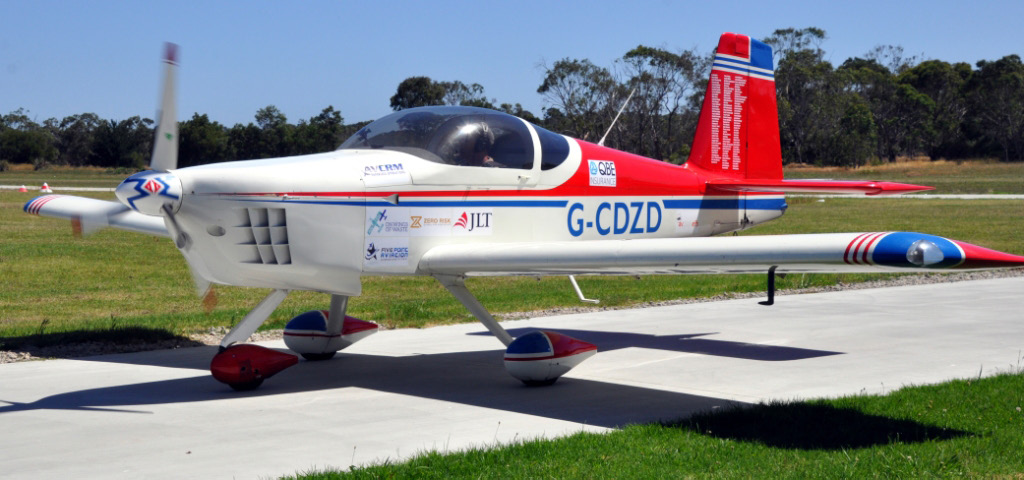
This short flight has now been recognised around the world and its future impact may be far reaching, but for Jeremy Rowsell and his team, even the longest journey begins with a single step.
This content is available exclusively to Australian Aviation members.
A monthly membership is only $5.99 or save with our annual plans.
- Australian Aviation quarterly print & digital magazines
- Access to In Focus reports every month on our website
- Unlimited access to all Australian Aviation digital content
- Access to the Australian Aviation app
- Australian Aviation quarterly print & digital magazines
- Access to In Focus reports every month on our website
- Access to our Behind the Lens photo galleries and other exclusive content
- Daily news updates via our email bulletin
The seed is sown
For many, the prospect of a trans-Pacific flight in a light aircraft would be the adventure of a lifetime. For Jeremy Rowsell, who had made the journey half a dozen times, it proved to be something even more. As he sat there with veteran ferry pilot Jim Hazelton, he began to feel an even deeper connection with the sea and sky.
As Jim mentored the younger pilot in the finer points of engine management, Jeremy became equally aware of the subtleties of the weather systems that they were navigating. For such a flight, a real awareness of engine and environment alike was critically important and like a sailor of old, Jeremy felt a real sense of oneness with the world about him.
However, his connection to the environment became tainted when he would walk down to the beaches of the islands he and Jim were transiting to discover plastic washing ashore. At first he wondered where it was all coming from and then he thought even more deeply. Here was the ocean, a massive, majestic beast and yet it could not protect itself from the plastic that was choking the life from its waters. With one eye on the sky and the other on the waves lapping at his feet, Jeremy decided to do something about the issue and the seed of On Wings of Waste (OWOW) was sown.
Fuelling the concept
Each year, eight million tonnes of plastic are dumped into our oceans. Aside from the obvious, visible debris, plastics are drawn into vast circular ocean currents (gyres) before breaking down and mixing with plankton. Plankton is at the heart of the foodchain, providing us with more than half the oxygen we breathe and absorbing carbon dioxide. In essence, our oceans are pivotal to our very existence.
The most effective solution is to prevent the plastics entering the water in the first place and with it taking hundreds of years to break down as landfill, Jeremy sought to use the waste as a fuel source. For aviation, this meant a viable alternative to Jet A1 fuel that could also be used in any diesel engine.
Some 95 per cent of the end-of-life plastic material is usable for diesel fuel and the remaining five per cent, known as char, is a solid which can be used as a fuel additive or pigment. The task of producing the fuel became the responsibility of UK-based Plastic Energy. Using a process called TAC (thermal anaerobic conversion), plastics are heated in an oxygen-free environment to prevent them from burning. The waste plastic is broken into component hydrocarbons to create the equivalent of a petroleum distillate. As there is no burning of the plastics, but rather a melting process, there are no toxic emissions released into the environment. The end product is a high-quality, low-sulphur diesel, suitable for use in an aero-engine.
Most light aircraft today are fueled by a low lead-based fuel known as Avgas, which is coming under increasing scrutiny and reduced availability in various parts of the world. Based in England, Wilksch Airmotive’s new WAM engine is suitable for both diesel and jet fuels. Weighing no more than traditional Avgas-burning engines, the WAM engine produces an excellent power to weight ratio while demonstrating up to 30 per cent greater range. Most importantly for Jeremy’s project, WAM engines are capable of running on bio-diesels. Consequently, the 120hp (90kW) Wilksch three-cylinder turbo-diesel WAM120 engine was chosen for On Wings of Waste and fitted to a Vans RV-9.
The flight
Jeremy’s further inspiration for the flight came from meeting with Jo Ruxton who worked on BBC’s Blue Planet, and had filmed the impact of plastic in our oceans. The project then gathered even greater momentum when world-renowned naturalist and broadcaster Sir David Attenborough backed the project.
“The On Wings of Waste flight, I hope, will bring the attention of the world to this great solution that is there waiting to be taken if only we can get the support of people to do so,” Sir David said.
The plan was coming together.
Jeremy initially planned to fly from Sydney to London, and he went through a series of survival courses including underwater escape training, hostile environments awareness and sea survival training with Tony Loughran, who runs a company called Zero Risk International.
However, logistical issues and timing put paid to the international flight and Jeremy’s focus shifted to a flight within Australia in the first instance.
On Wings of Waste then set about building a team that included Tony Loughran and chief pilot and advanced flying instructor Chris Clark of Five Point Aviation. In conjunction with Chris, Jeremy tested fuel that had been shipped out from England by Plastic Energy. In the end, a 90/10 per cent mix of conventional and end-of-life plastic blended fuel was chosen for the flight and no engine modifications were required. Step by step the team worked towards its goal with various setbacks along the way until the day arrived for the historic flight.
With Jeremy at the controls, the WAM-powered RV-9 departed Wollongong and arrived at Tyabb after an uneventful 5 hours and 40 minutes of flight time, having burned the blended fuel at a rate of 17 litres per hour.
“The flight was very successful and uneventful. It was a true proof of concept,” Jeremy reported immediately after the flight.
He further stressed that such a flight serves to highlight that, “a small group of Australian aviation enthusiasts can truly make a difference”.
However, with the passage of time and reflection, the significance of the flight that was years in the making has hit home more fully with Jeremy. And rightly so as it has been recognised in both an aviation and environmental sense by organisations ranging from the Experimental Aircraft Association to the United Nations.
It may have been almost overlooked by many, but this relatively short five-hour flight flight may be the first step on a far longer road.
The future
“On Wings of Waste showcases a fuel that is practical for the aviation market but also has other applications,” Jeremy describes.
“It will perform like any other diesel except with one important difference: its source will be from end of life non-recyclable plastic. ” The potential seems enormous for the aviation industry alone, given that fuel usage accounts for around a fifth of an airline’s operating costs.
He further explains that current acceptable plastics are all Polythenes, Polypropylenes, Polystyrenes and they can be mixed. In Plastic Energy’s process, diesel can be produced for around 32 cents per litre. By calculating the costs of waste management, landfill and the costs of producing new fossil fuels and comparing these to the costs of utilising a widely-available waste product, it quickly becomes self-evident that there is economic merit in the concept.
And if an airliner burns 163,000 litres of fuel and if 10 per cent of that fuel was sourced from plastic waste it would be the equivalent of 18 tonnes of waste that might otherwise be dumped in the ocean.
Still, Jeremy recognises that it is important to not infer that OWOW could solve the entire aviation fuel issue. What the project is trying to do is positively contribute to cleaning up the oceans and the environment by putting the waste products we produce to a positive useful purpose.
One small step
The next step on Jeremy’s journey will be to build upon the success of the initial flight. There will be another Australian proving flight before the project looks to stretch its wings overseas, all the while On Wings of Waste will continue to promote its 4-R message to recycle, re-use waste, refuel with blended fuel and rescue the world’s oceans.
“We aim to encourage a widespread change in behaviour and give people the ability to be part of something very important on a global scale,” Jeremy says.
That a concept conjured as one pilot cast his eyes on the ocean below could potentially impact the entire aviation industry is nothing less than inspiring. That reality may all be some once said, “This is one small step. ”
It will perform like any other diesel.

Jeremy Rowsell.
Want to see more stories from trusted news sources?
Make Australian Aviation a preferred news source on Google.
Click here to add Australian Aviation as a preferred news source.




