
 iscover
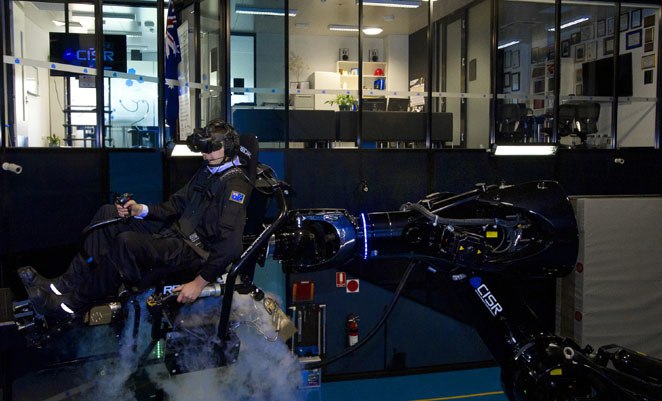
A seat at the end of a giant robot arm is at the centre of what is being hailed as “the next big thing” in combat flight simulation.
This content is available exclusively to Australian Aviation members.
A monthly membership is only $5.99 or save with our annual plans.
- Australian Aviation quarterly print & digital magazines
- Access to In Focus reports every month on our website
- Unlimited access to all Australian Aviation digital content
- Access to the Australian Aviation app
- Australian Aviation quarterly print & digital magazines
- Access to In Focus reports every month on our website
- Access to our Behind the Lens photo galleries and other exclusive content
- Daily news updates via our email bulletin
- Unlimited access to all Australian Aviation digital content
- Access to the Australian Aviation app
- Australian Aviation quarterly print & digital magazines
- Access to In Focus reports every month on our website
- Access to our Behind the Lens photo galleries and other exclusive content
- Daily news updates via our email bulletin
As this video at the end of this post makes clear, Deakin University’s new Universal Motion Simulator (UMS) is not for the weak of stomach.
Capable of exerting a face-distorting six Gs of force, the UMS can spin users at high speed in any direction, including upside-down. Combined with a high resolution 3D display mounted inside a headset, it provides a far more realistic training environment than traditional aircraft simulators, the designers say, and could also be used to simulate tanks, race cars, motorcycles – or virtually anything else. It could even be linked with similar machines elsewhere to simulate an aerial dog fight.
“Its training capabilities are endless,” Professor Saeid Nahavandi, the Director of Deakin’s Centre for Intelligent Systems Research, said. “No other simulator can provide the full experience of flying a military jet with all the gut wrenching G-forces while only seven metres off the ground.”
If that wasn’t enough, the simulator can also monitor a pilot’s brain activity as well as pulse and blood pressure to measure physical and mental responses.
Deakin has received $1.8 million in government grants toward the establishment of the facility housing the UMS.
Want to see more stories from trusted news sources?
Make Australian Aviation a preferred news source on Google.
Click here to add Australian Aviation as a preferred news source.







pez
says:Tip for Deakin when making a video; less talking head, more giant robotic arm passenger POV footage.
Allan
says:Where can i get myself one of these. It looks awesome. Some people get all the fun.
Peter
says:Indeed Allan, it does look awesome to go up on the new motion simulator. I like that it should be great fun.